
Reflection Frame 10″Ringlet: FirstUse
...not just for walls anymore!!!
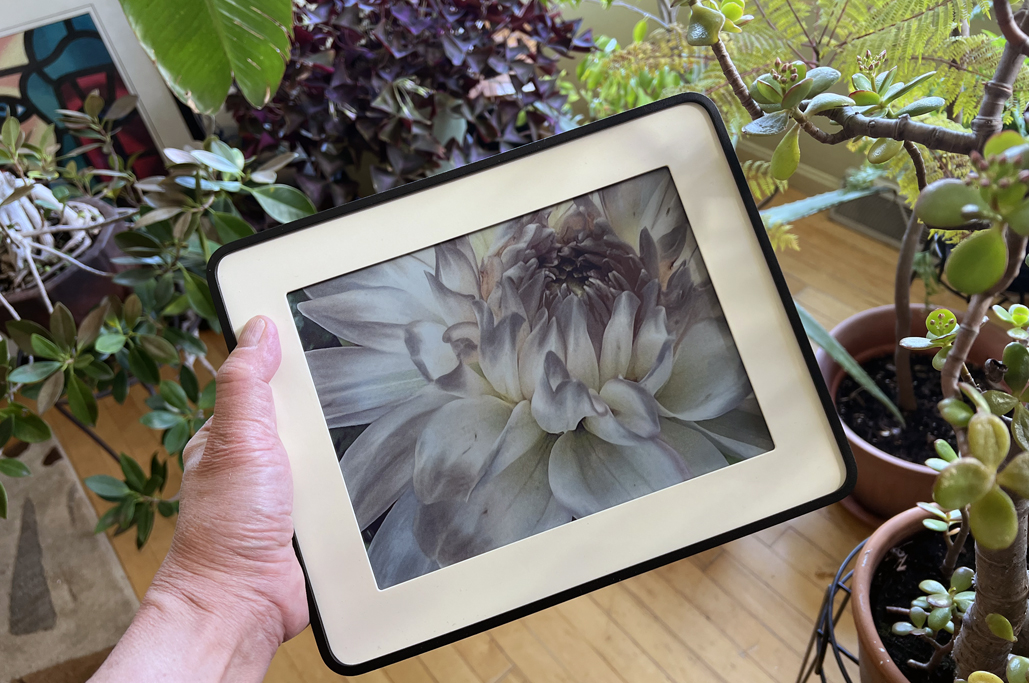
Electronic Paper tech has come a long way.

Printing
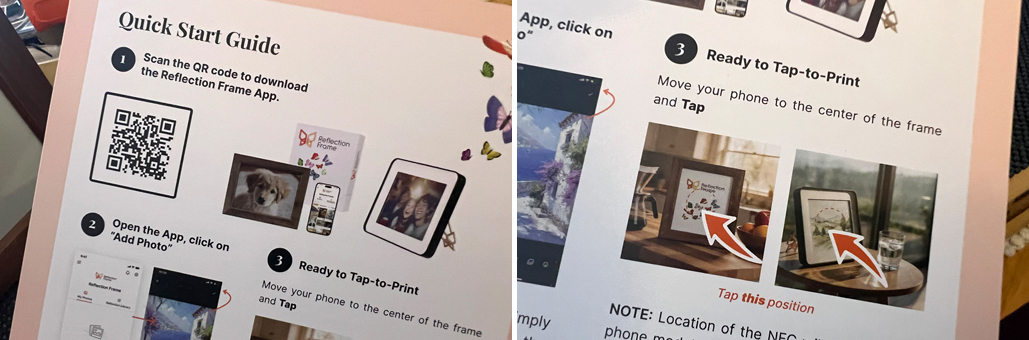
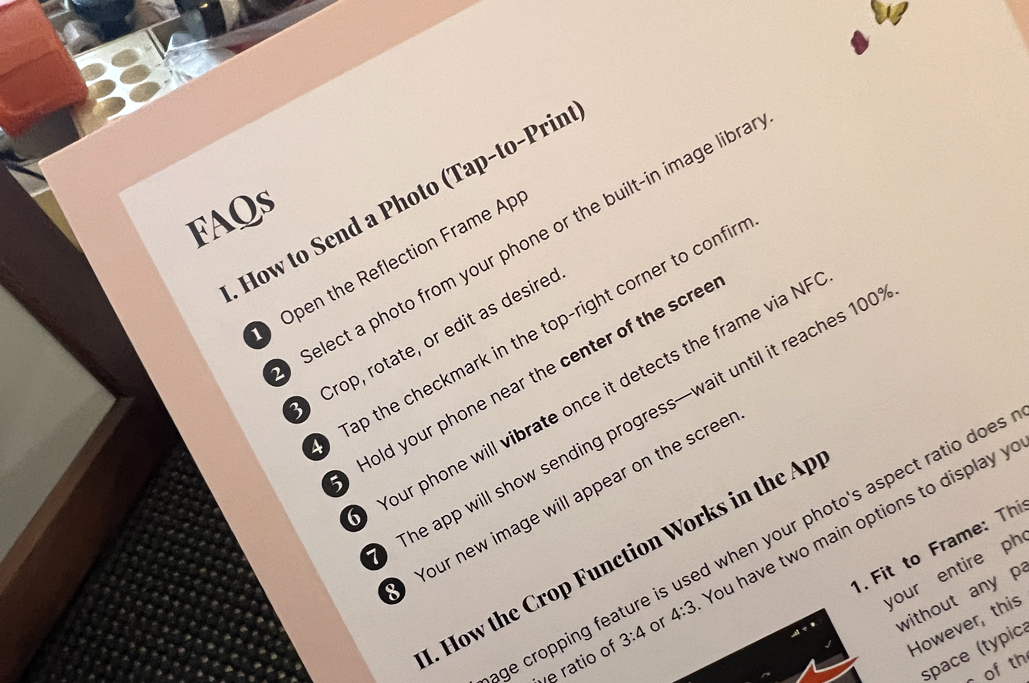
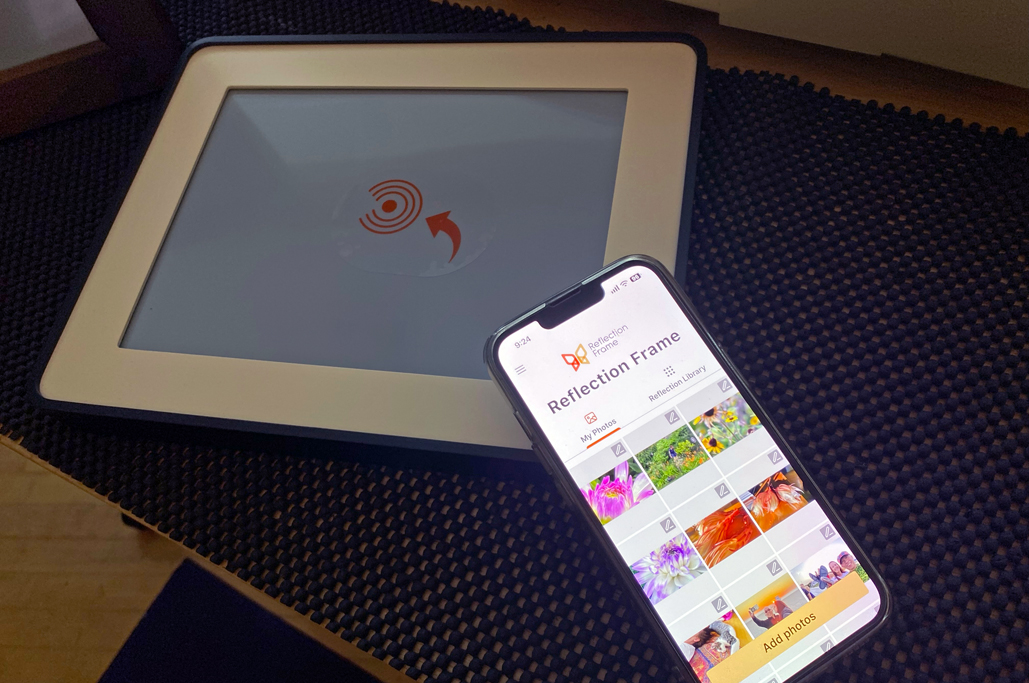
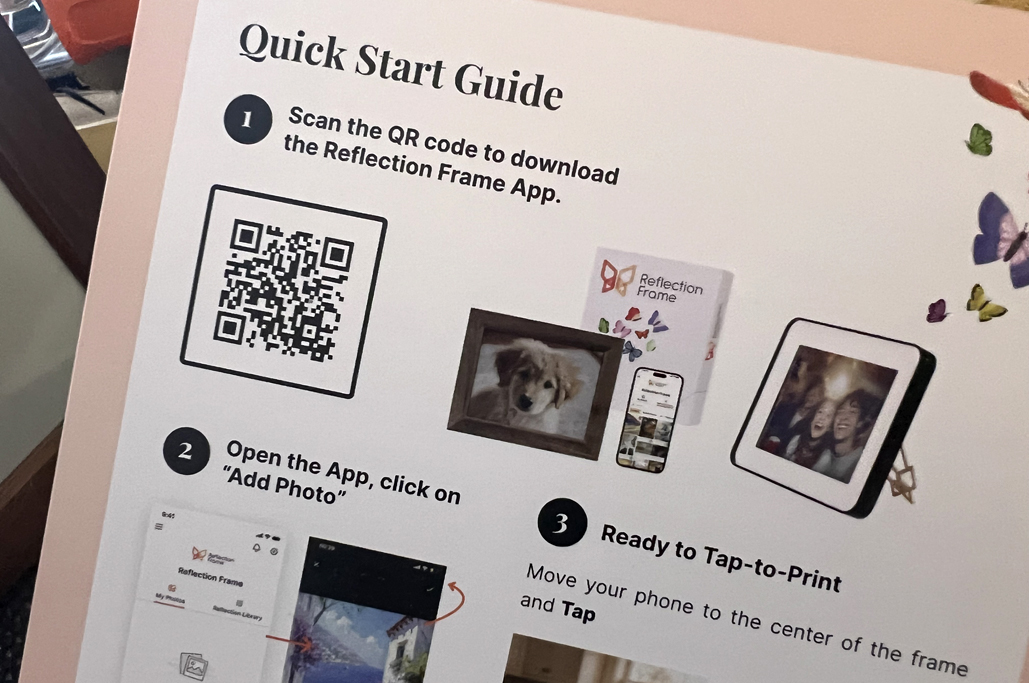
Images are transferred to the frame via a smartphone app. Reflection Frame calls it “printing” to differentiate the process from sending a photo to the LCD frames. It also reinforces the idea that the images look more like a paper print than an LCD displayed image.
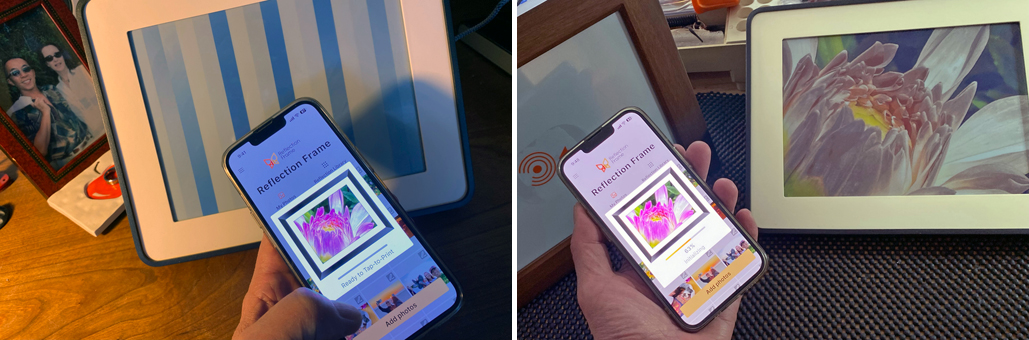
Power is only needed when uploading an image.
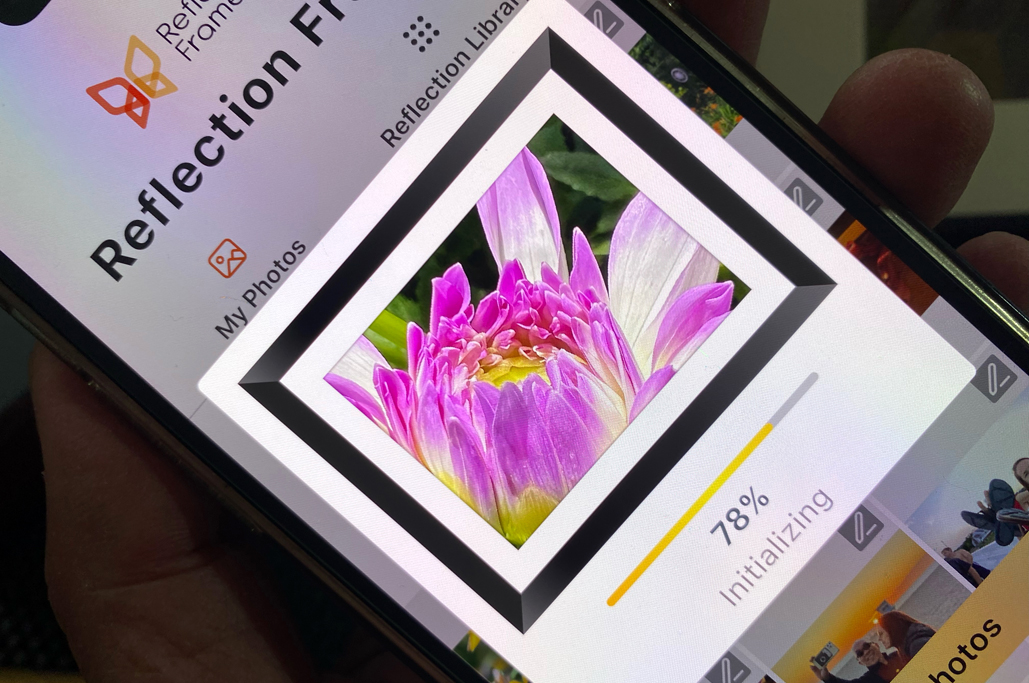
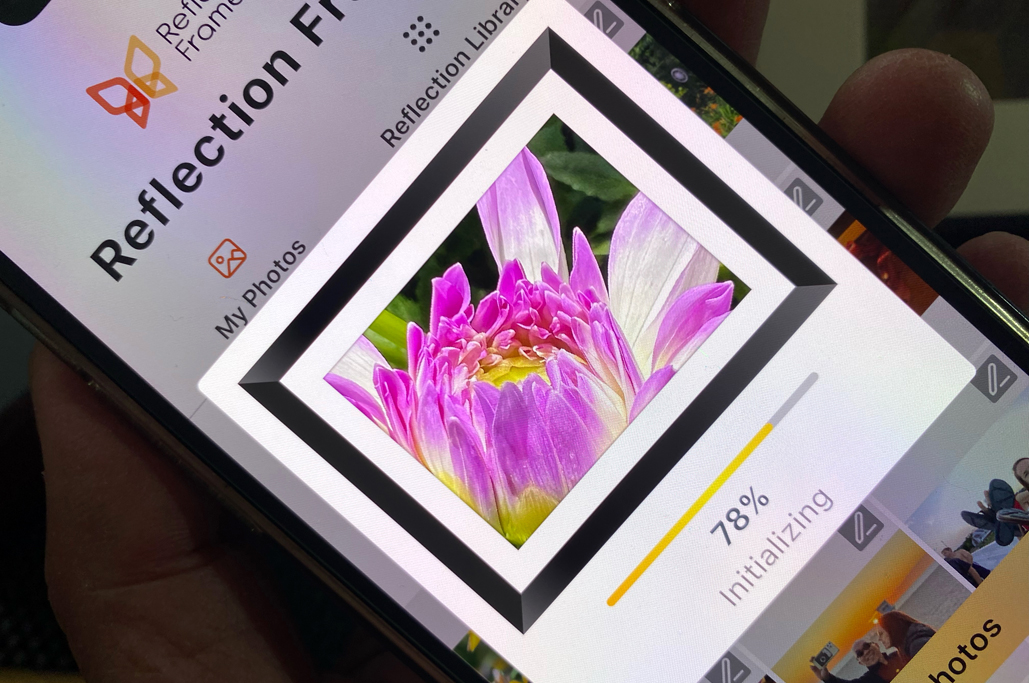
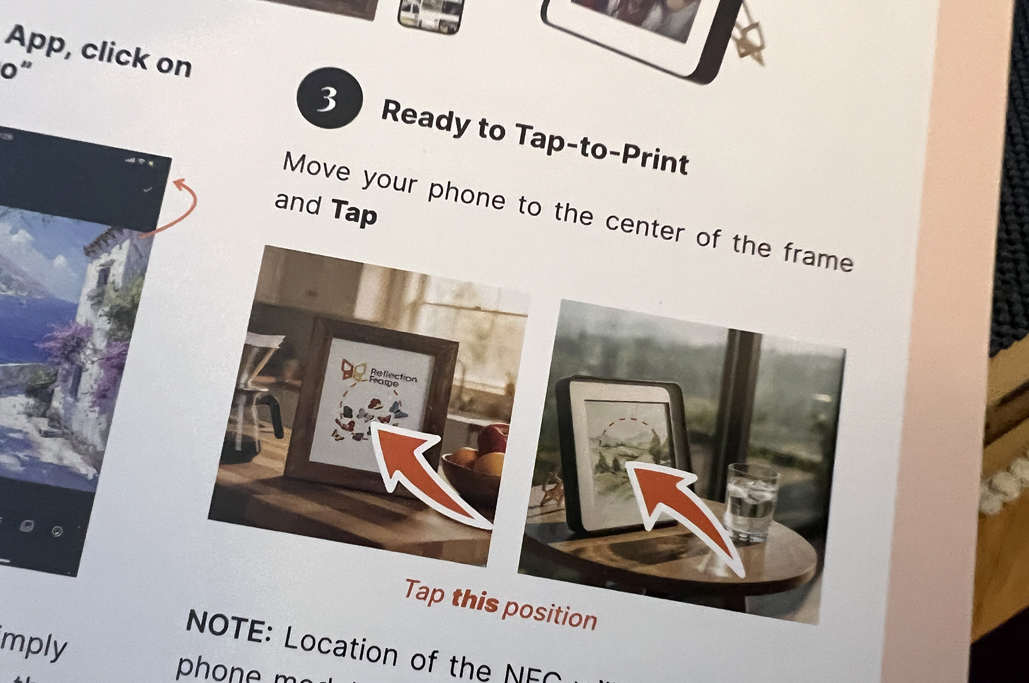
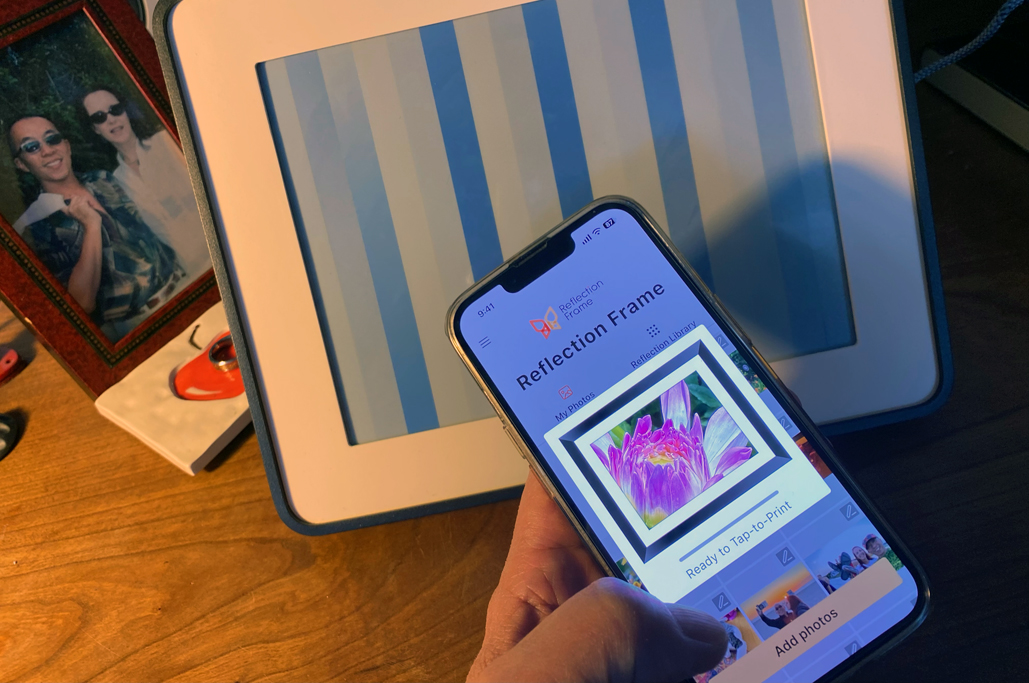
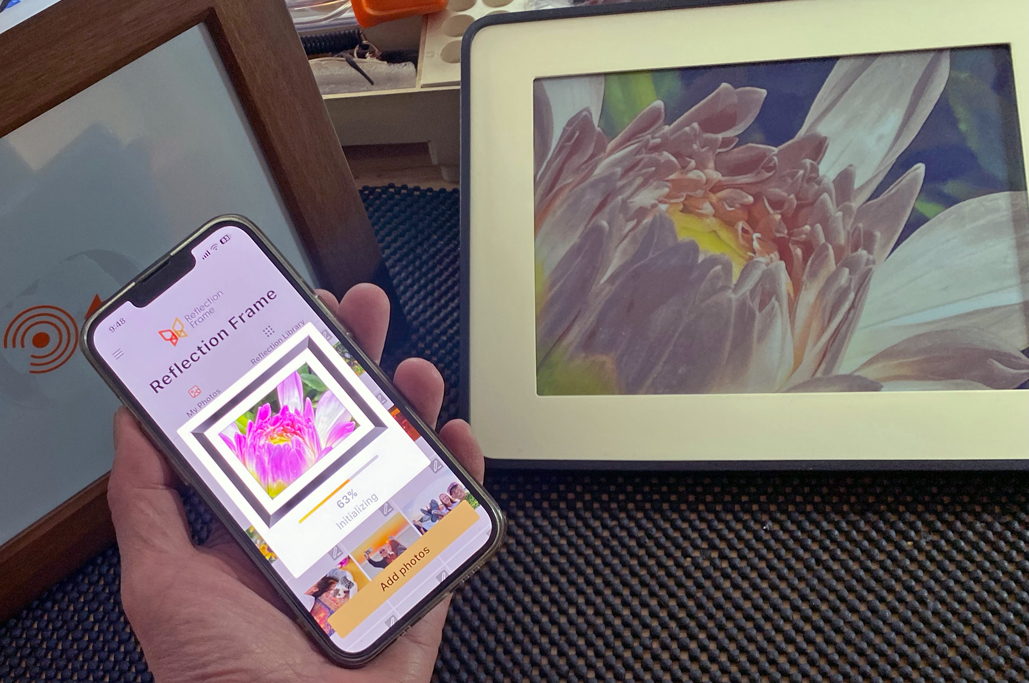
After a photo is selected, a tap in the app initiates the NFC connection, and Bluetooth transfers the data directly to the frame without needing Wi-Fi. The screen updates a few times, and the new image is then displayed. The process takes less than a minute.
Both the 10-inch and 13.3-inch Reflection Frame models have a resolution of 1600 × 1200 pixels (4:3 aspect ratio). Because both models have the same number of pixels in different screen sizes (200 ppi for the 10″, 150 ppi for the 13.3″), the small version is sharper. While sharper, up-close inspection will still reveal a faint halftone dot pattern.

Lighting
Unlike modern LCD or OLED screens that display 24-bit color (16.7 million colors), the Reflection Frame uses an E Ink Spectra 6 color e-paper display.
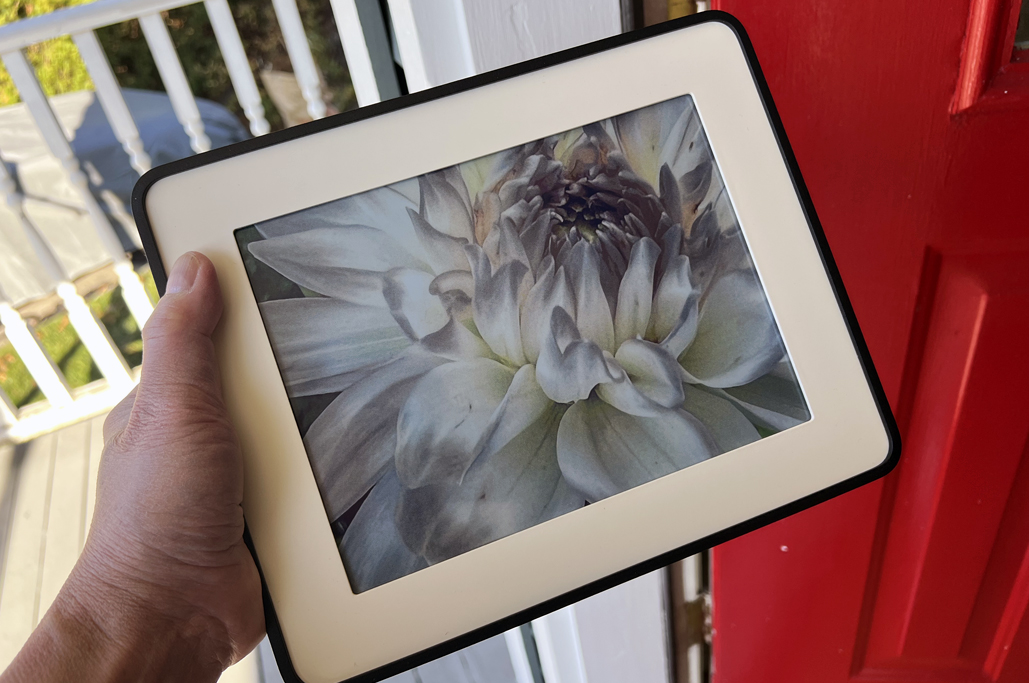
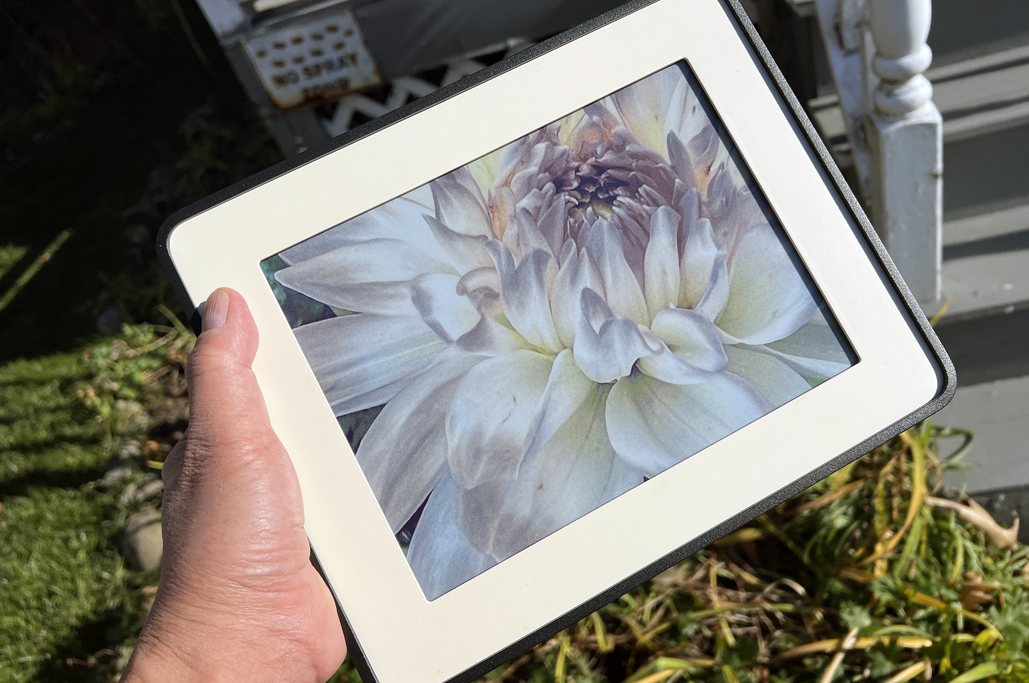
The one requirement, as with an actual print, is that light is needed for viewing (ambient, bright, indirect). Unlike an LCD, ePaper works well even in bright direct sunlight.
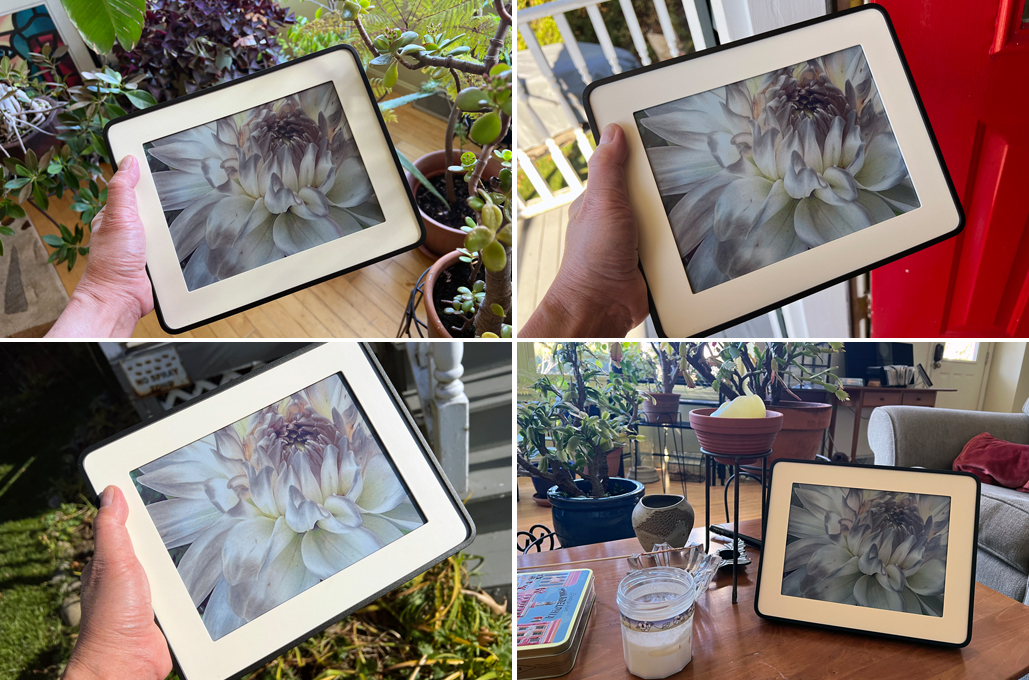
FirstThoughts
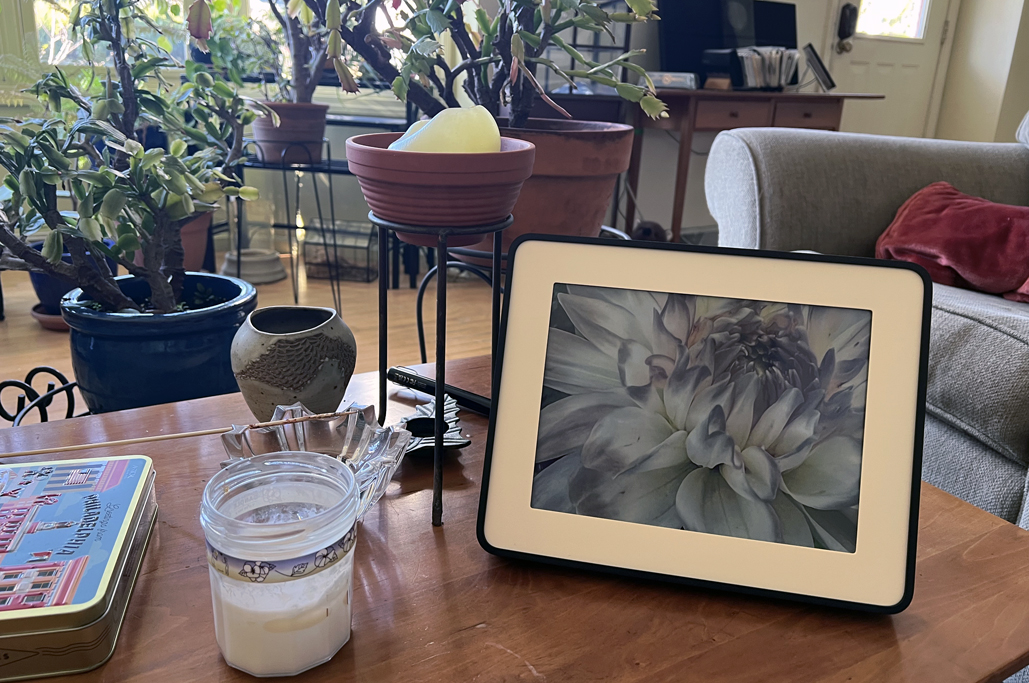
The larger, first-generation frames are sized for hanging on a wall. These newer smaller ones are sized for a desk. Placement flexibility is a selling point and will be a key factor once ePaper’s color and resolution approach that of LCDs. Right now, it may not be enough to justify the higher price.
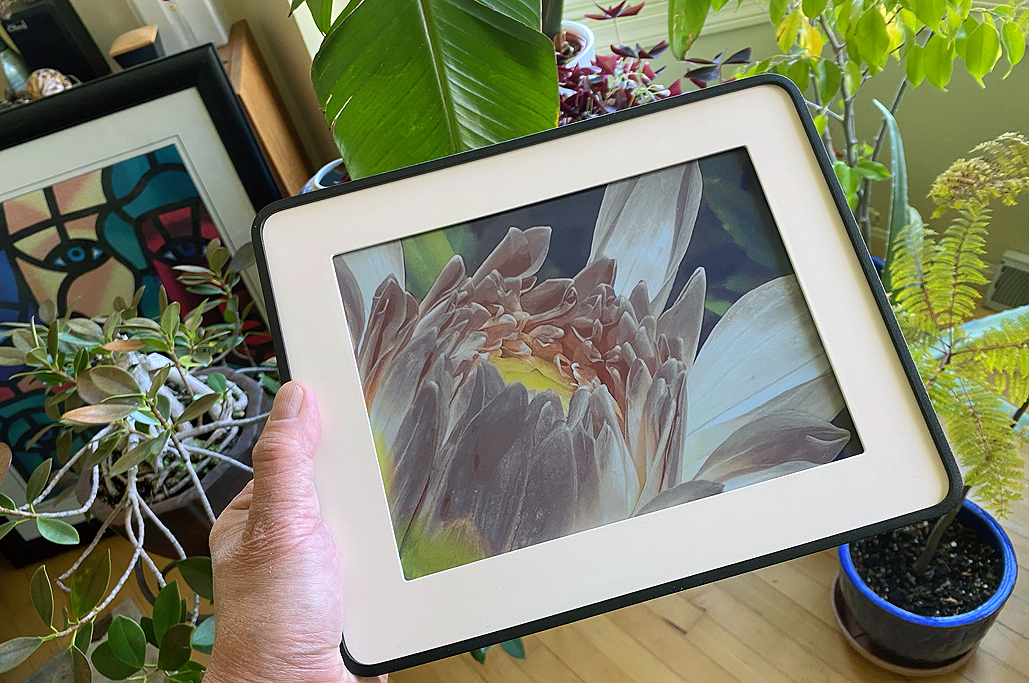
The ePaper works great for some images, but not so well for others. We are not convinced that a smaller version is the right direction for ePaper at this time. It has a watercolor quality that differs from bright LCD photo frames, but is very pleasing to the eye.
Personally, we feel that ePaper is excellent for displaying artwork, and not so good for photos, especially those with faces.
At $200, these smaller frames are not price competitive with LCD photo frames at all. We’d argue that Reflection Frame should offer a version even larger than 13.3″, and go after the art market. LCD photo frames cannot compete in that segment because of weight, power requirements, and reflection issues….just a thought 🙂


Leave a comment