
Boxster Project: PDR Kit FirstLook
$40 kit vs $1200 bill!!!
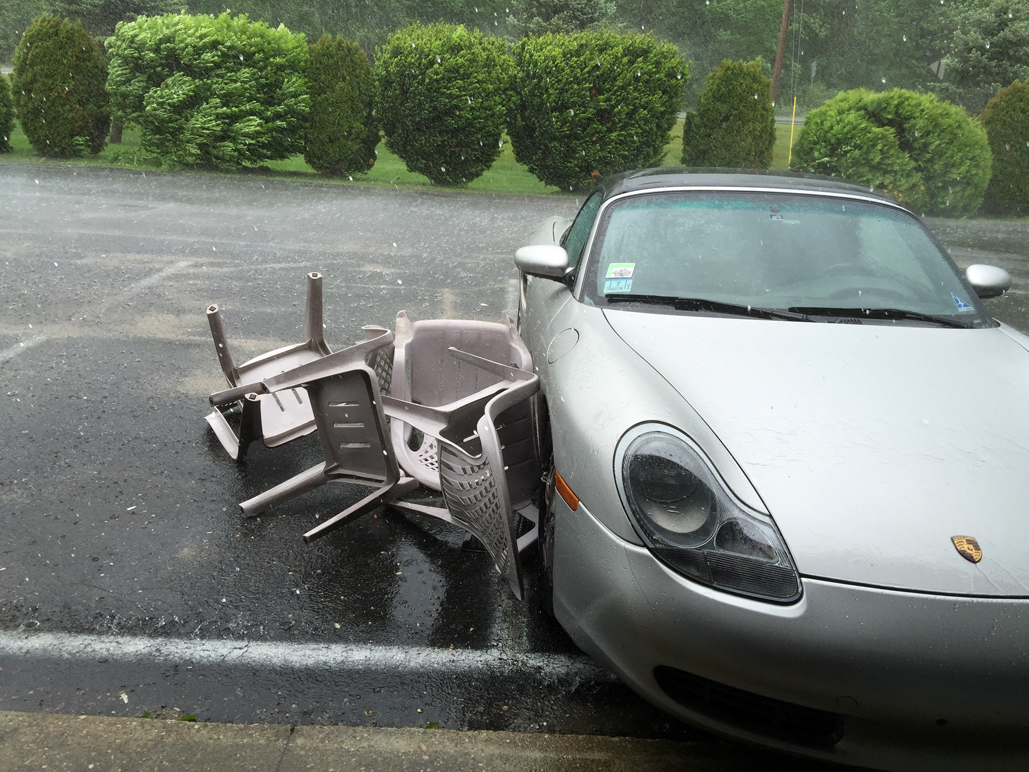
Back in May 2016, THIS happened to the Boxster when it was parked at a motel on a road trip. It was a freak thunderstorm, so the motel’s insurance company denied the claim.
As the car was already 16 years old at the time, it no longer had much insurance coverage. The quote by a PDR guy back then was over $1,200, so we’ve been living with the dozen or so small body blemishes for the past decade.

When a Paintless Dent Removal (PDR) kit popped up on sale at Amazon for $40, we thought…”Hmmm, that would be a good RainyDayProject :-)”
Paintless Dent Removal
Just what is Paintless Dent Removal (PDR)? PDR is a technique of “fixing” minor dings, dents, and blemishes from a car’s body panels without using fillers or repainting. The idea is to “pop” the metal back into place by “working it” from the front or the back of the panel. As long as the paint hasn’t been damaged, this type of repair can be as good or almost as good as new.
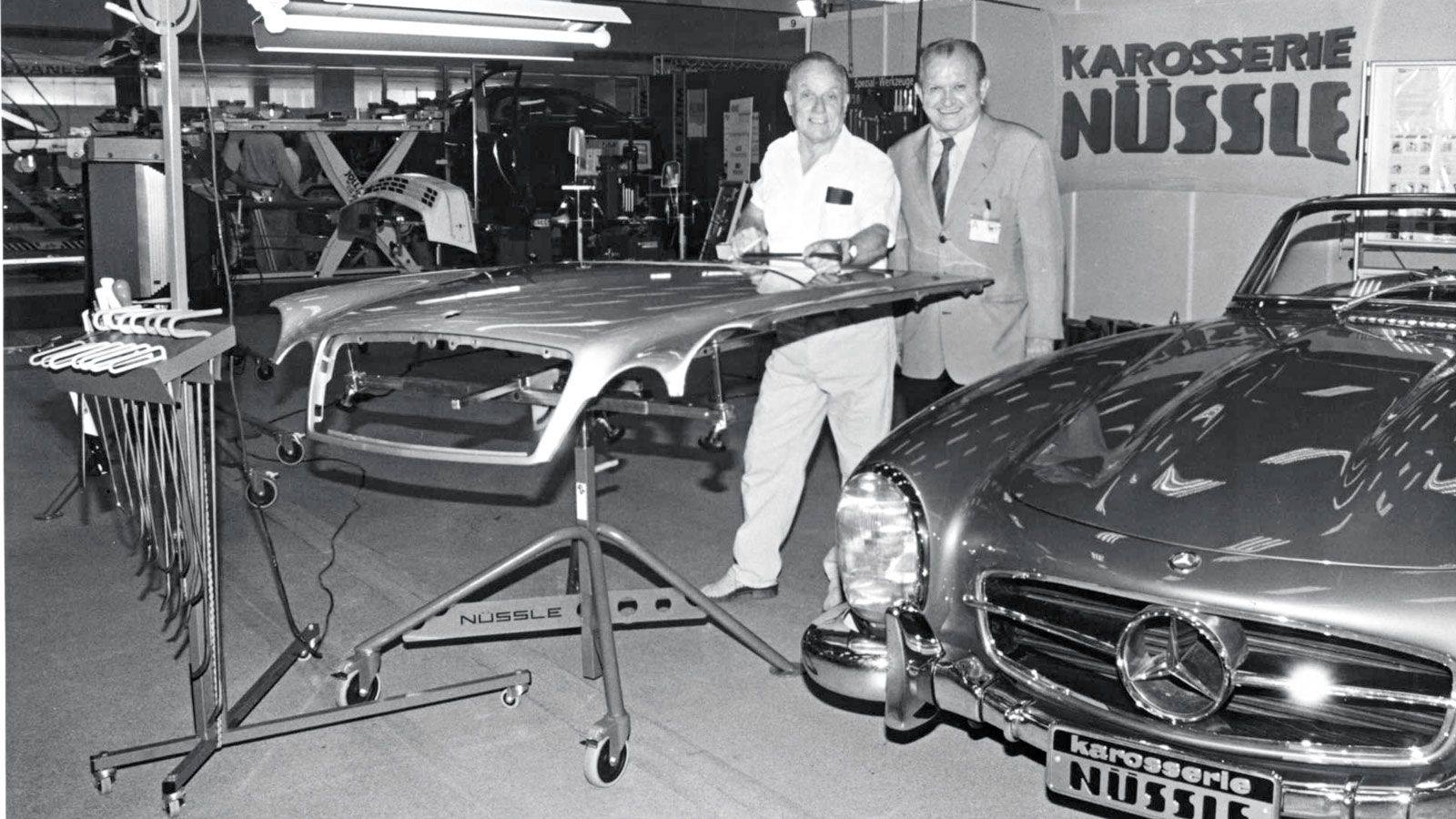
PDR has been around for a long time, a lot longer than most people think. Frank T. Sargent, through his book The Key to Metal Bumping, was the first to introduce the technique. Oskar Flaig, in 1960, gave the public a first-hand look at how it was done when he fixed a bunch of dents on some Mercedes-Benz cars at the International Motor Sports Show in New York…and the rest was history 🙂

PDR Kit
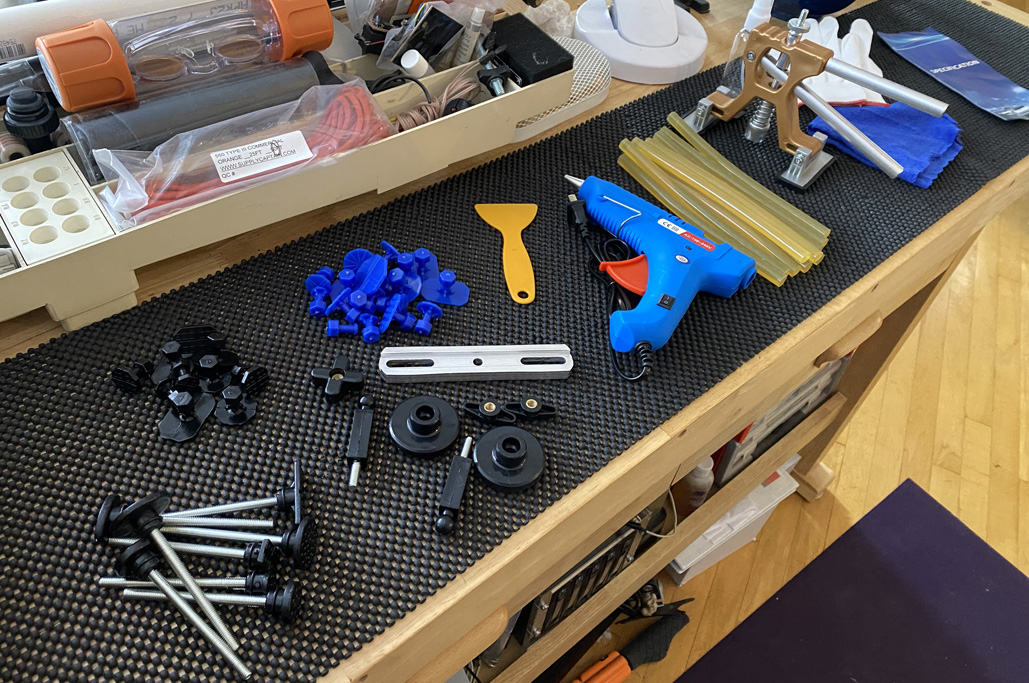
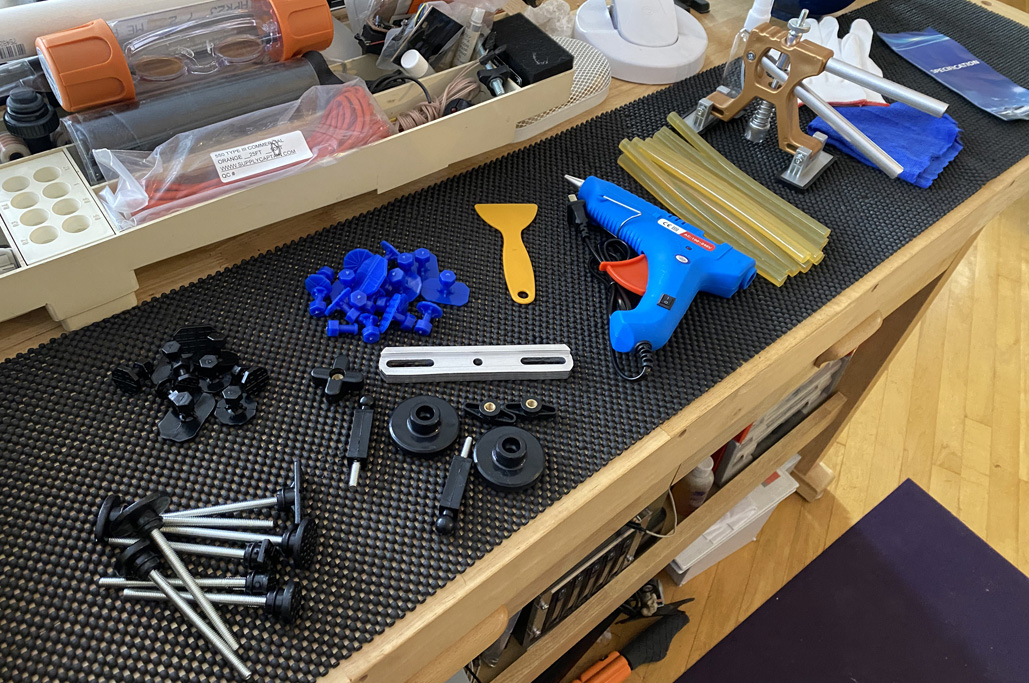
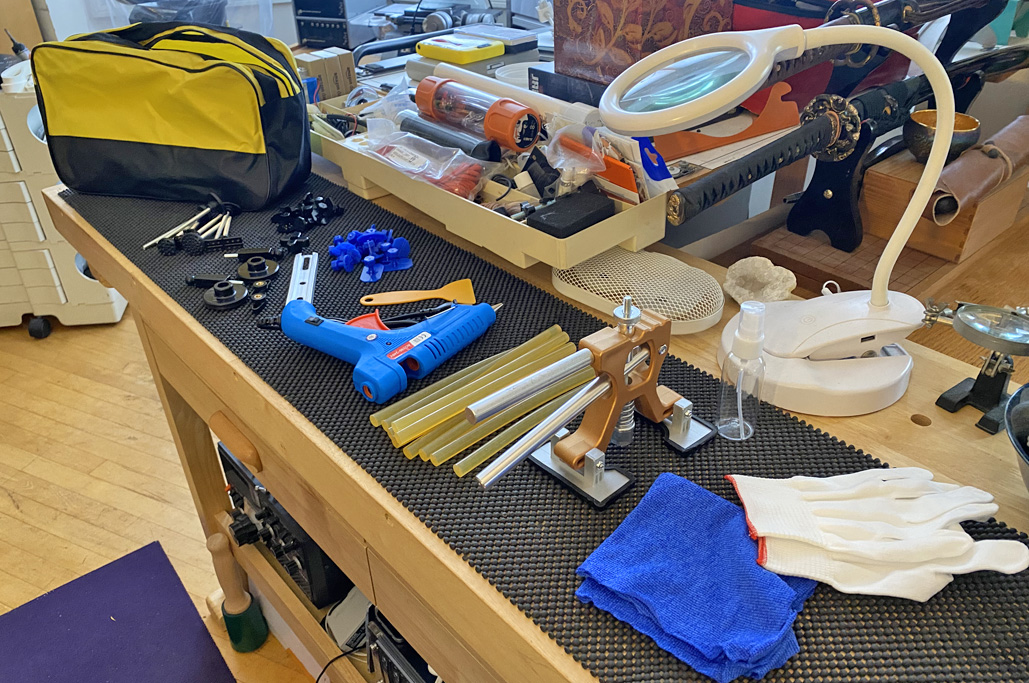
What came in the $40 Amazon PDR kit:
- Dent lifter w/28 dent puller tabs (various sizes),
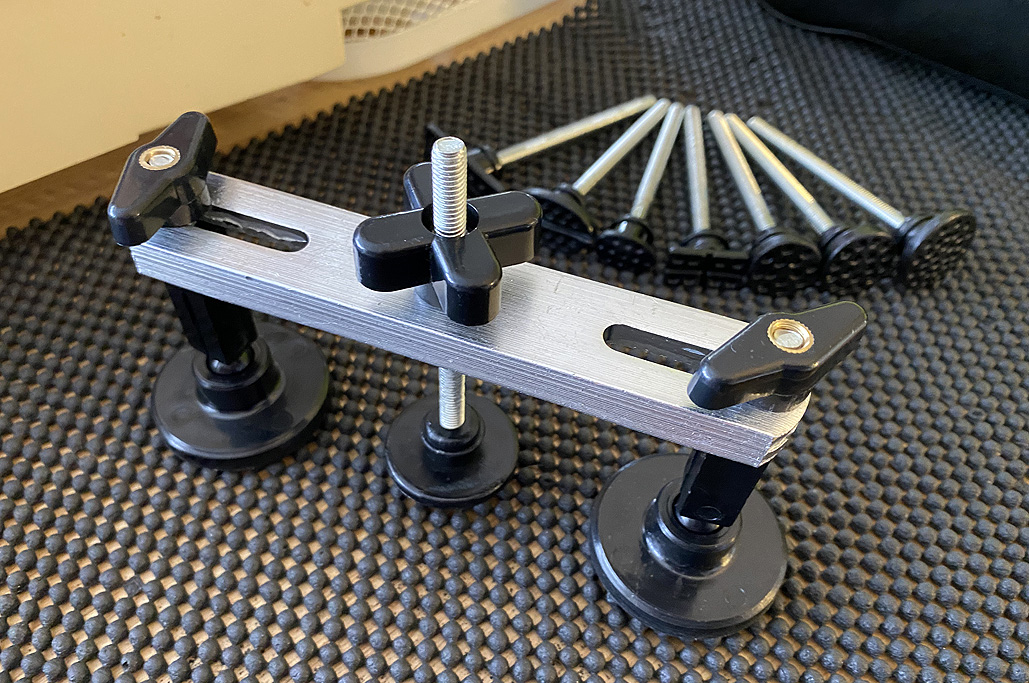
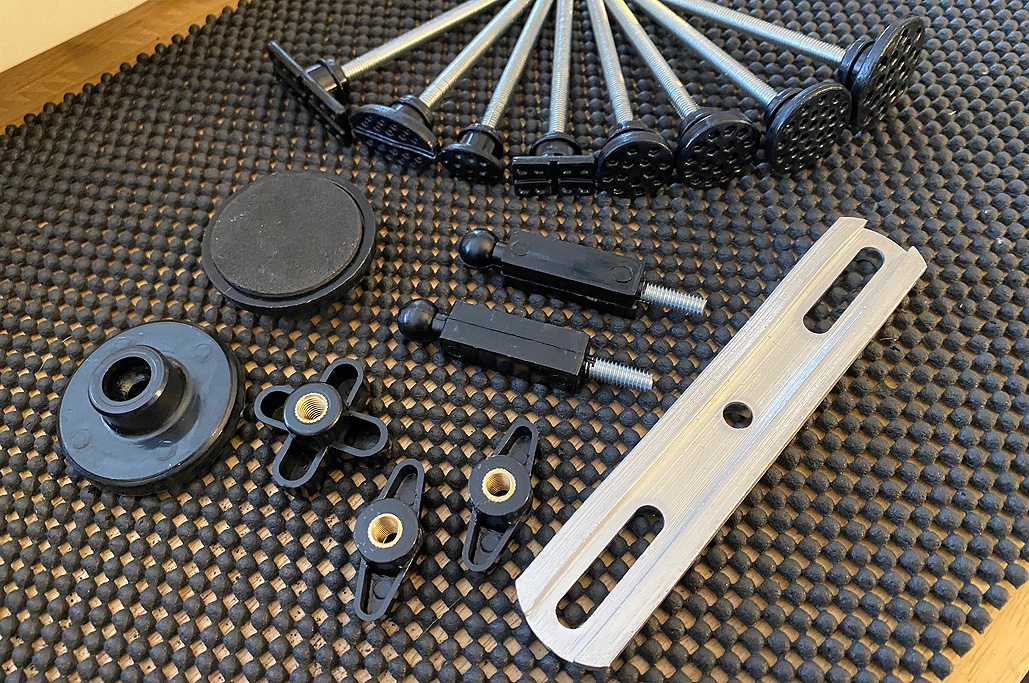
- Pulling bridge w/8 posts,
- Glue gun w/10 Glue Sticks,
- Rubber spatula, spray bottle, cloth, pair of gloves,
- Kit bag.
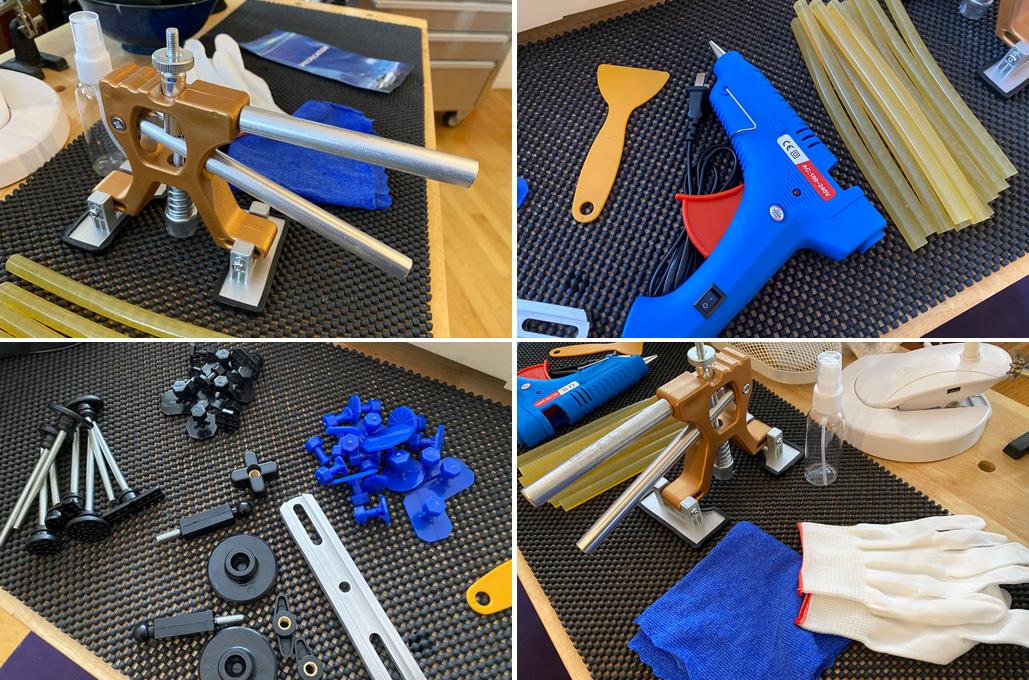
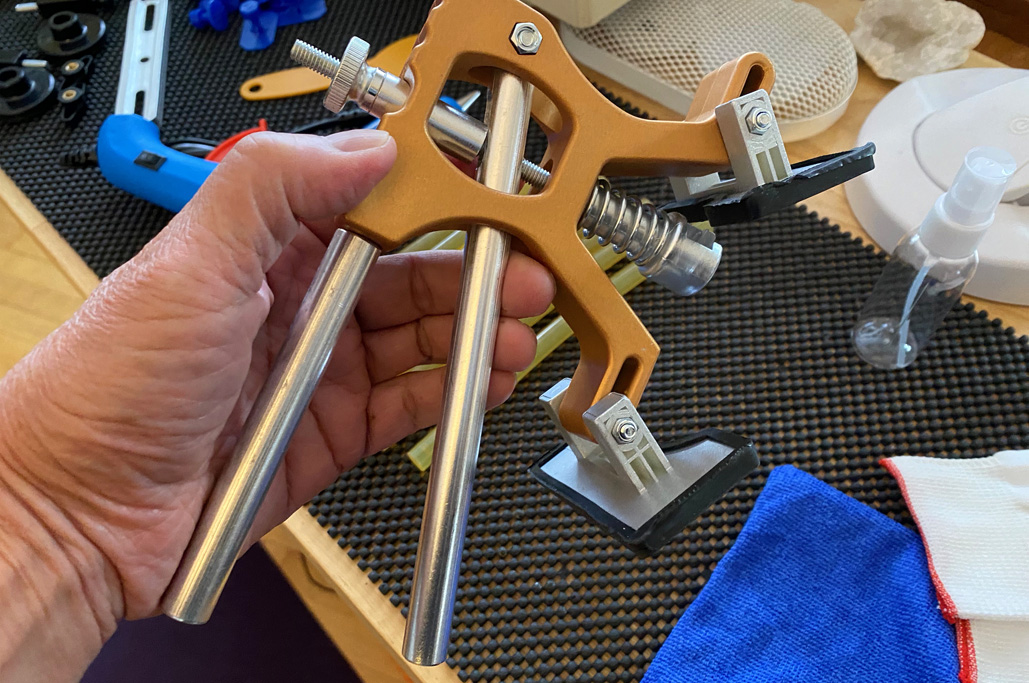
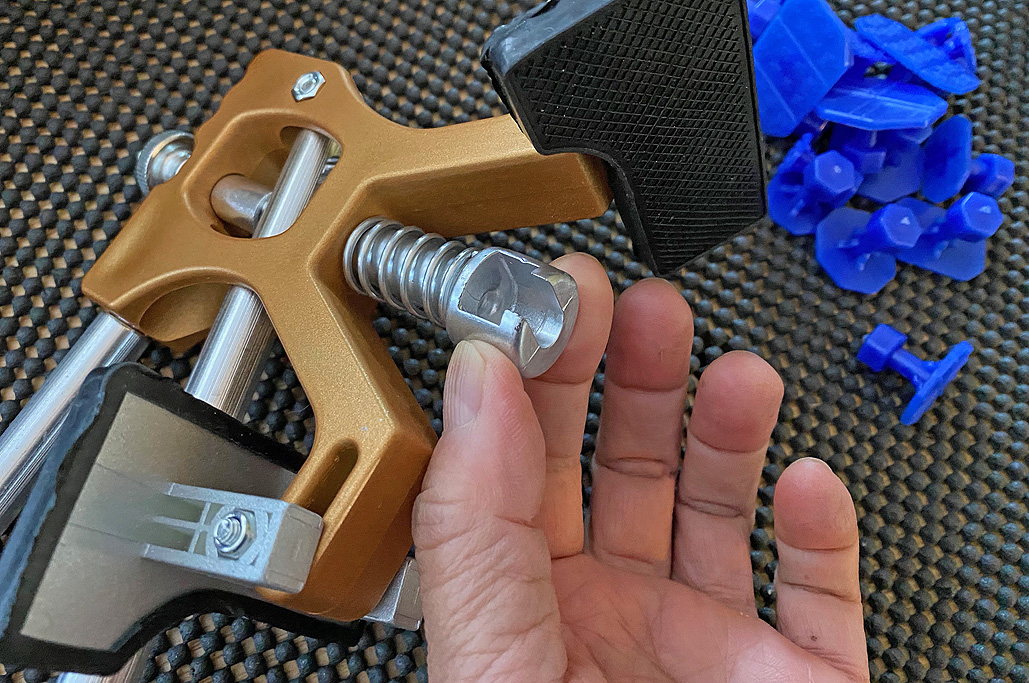
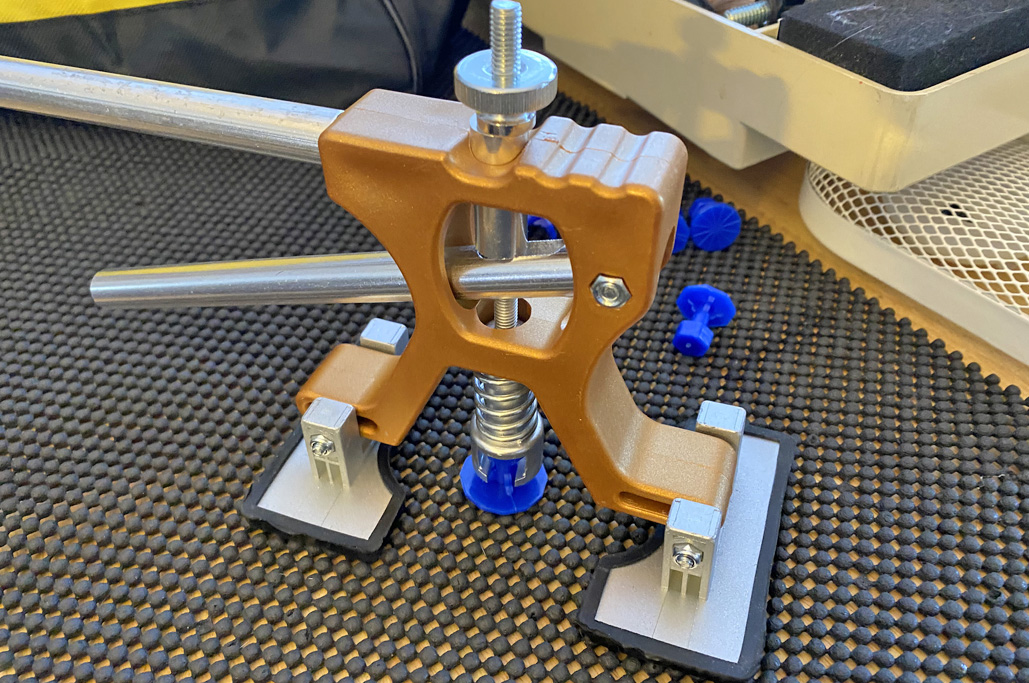
The dent lifter is a contraption with two rubber-padded feet and a hand-operated lever. It can be adjusted to limit the amount of travel of the lifting post. The user controls the pulling pressure by squeezing the hand grip. The principle is sound, so we are eager to see how effective it is in action.
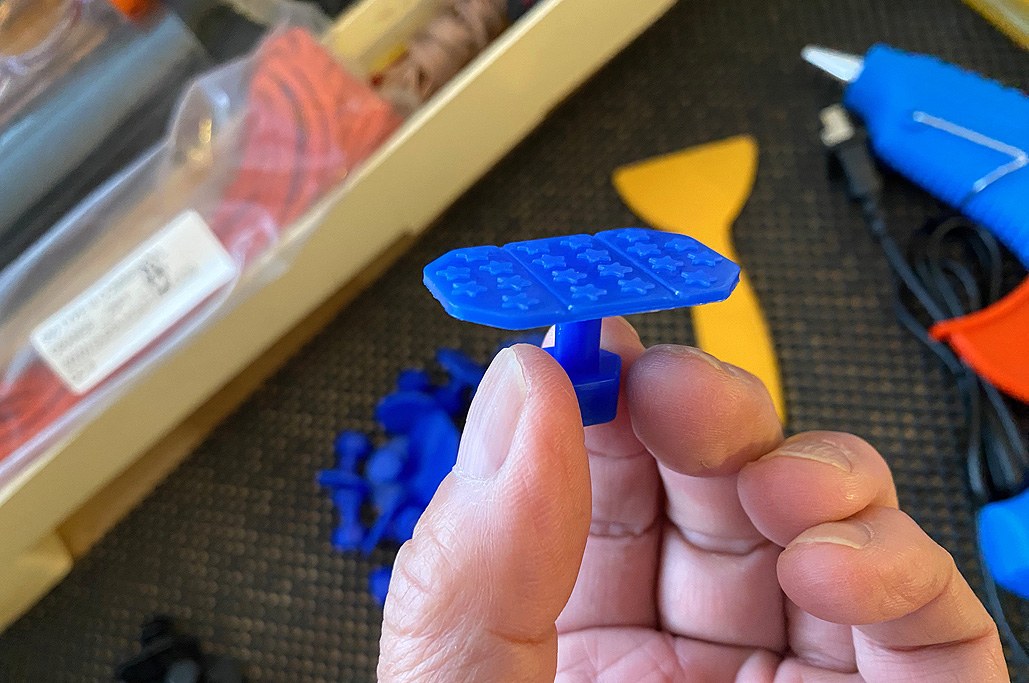
Hot glue will attach the pulling tabs to the surface. A variety of pull tabs of different sizes and shapes are provided, the implication of which shape to use when is fairly obvious. What is unclear is the size. We’ll have to experiment. Along with the tools are miscellaneous items such as a spray bottle, gloves, clean cloth, and a kit bag.
Closer Look
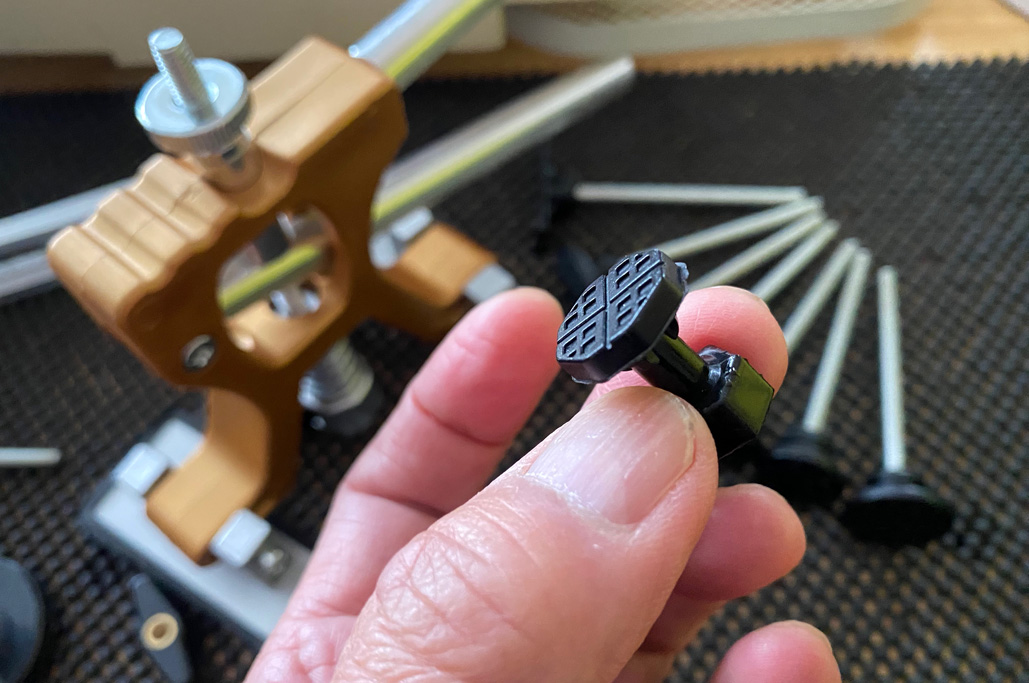
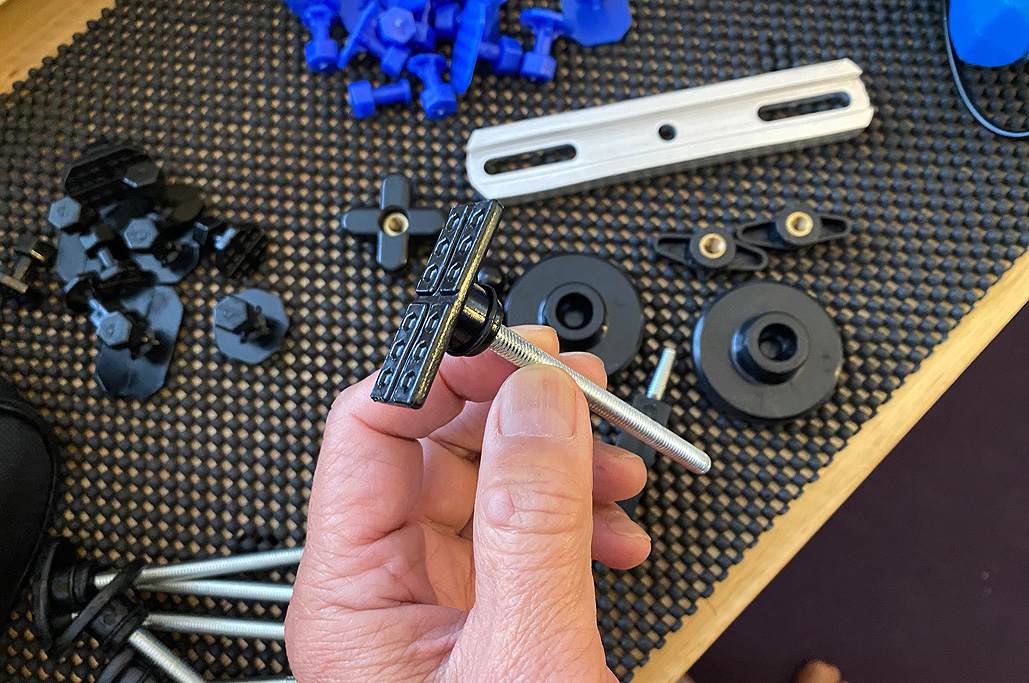
There are three different types of pull tabs in the kit. Two of them have knobs at one end and various shapes on the other. The third has a flat surface on a threaded post. The ones with the knobs work with the hand-operated puller. The ones with the threaded post work with the pulling bridge.

The hand-operated dent puller came fully assembled. All its parts (body, levers, etc) are aluminum. The feet are rubber-padded to prevent marring. The overall weight is very light, but appears sturdy enough to do the job.
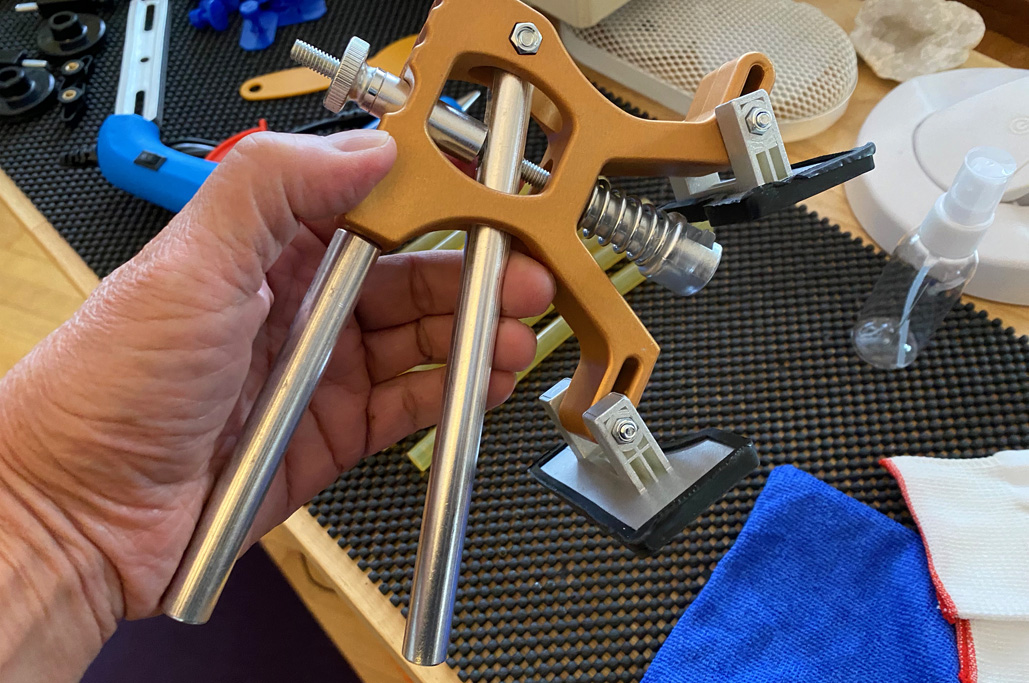
The threaded knob at the top is for adjusting the depth, allowing the pull to mate with the tab glued to the dent. Once mated, squeezing the level will then work the dent…at least that’s the theory 🙂

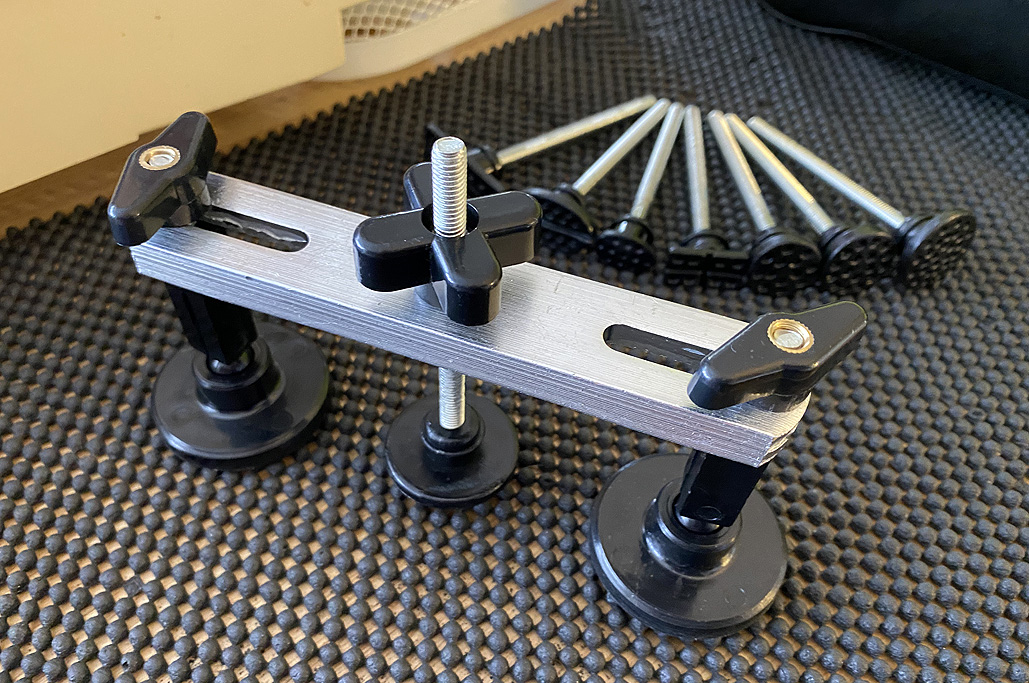
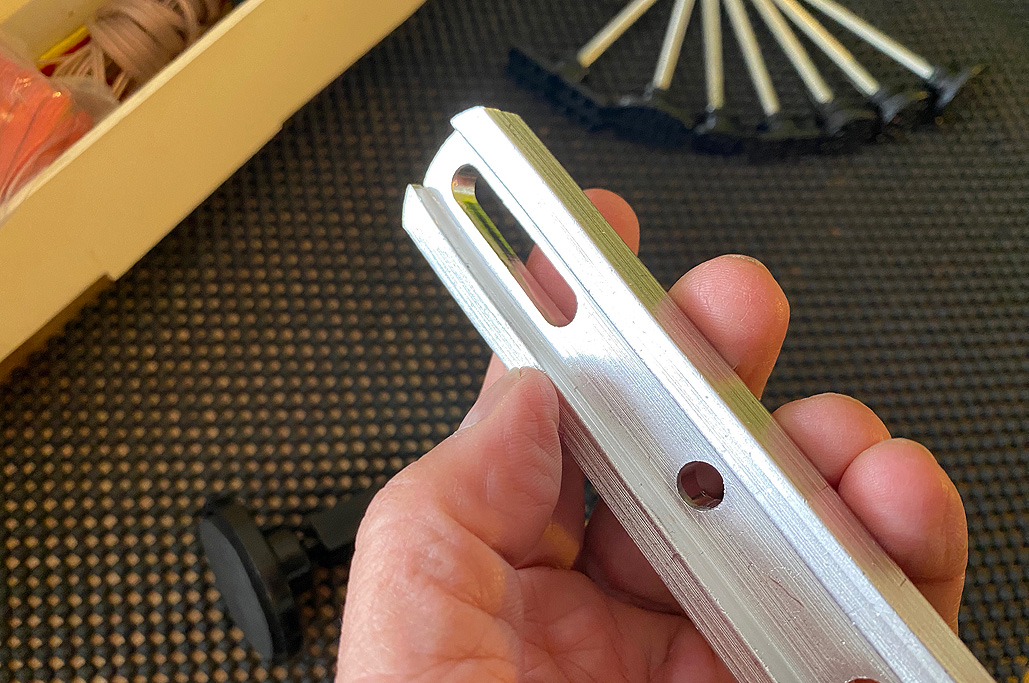
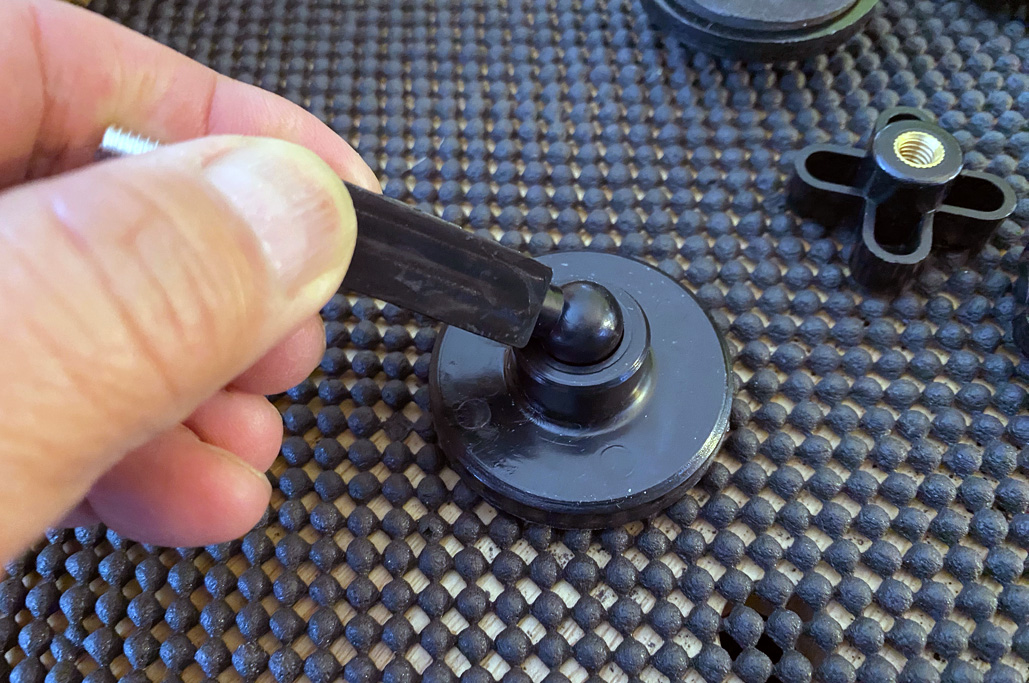
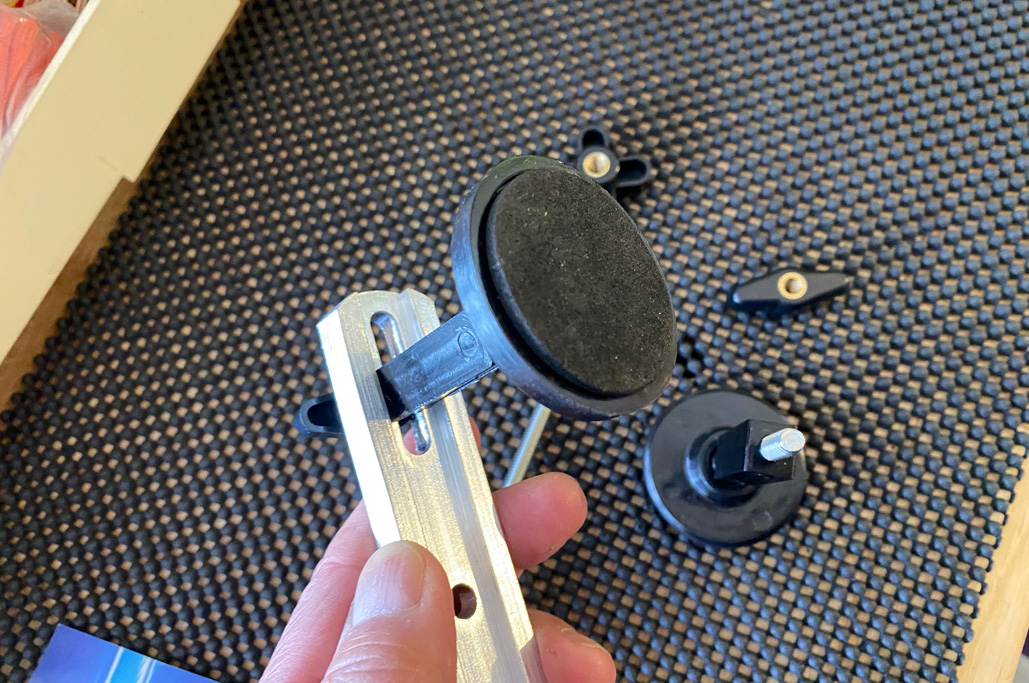
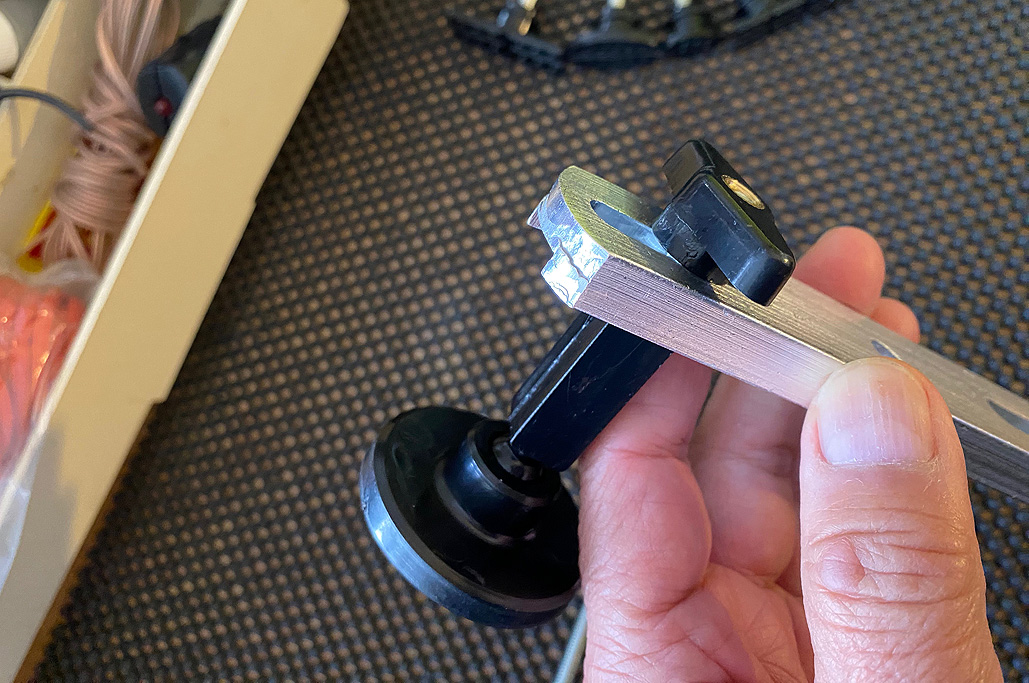
There is another tool for working on the dents. It is the pulling bridge. The principle is the same as the lever, but it uses a threaded knob to pull instead. This tool required a little bit of assembly.
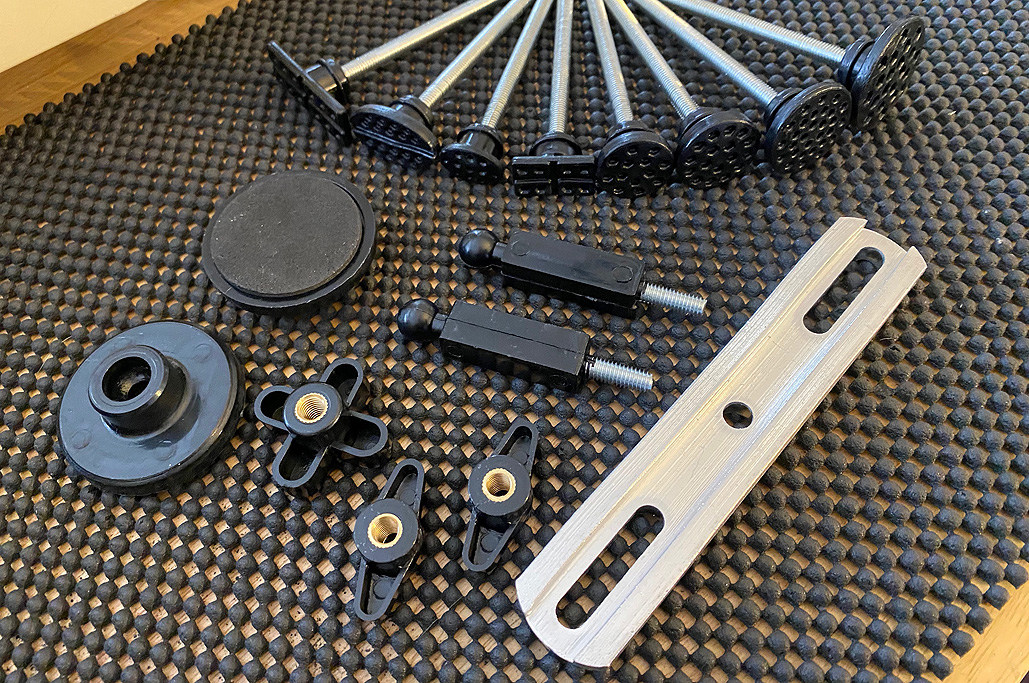
Assembly:
- Find the side with the channel,
- Push the ball of the leg into the socket of a padded base, and
- Secure the leg in the channel, then repeat for the other leg.

To use the bridge, we assume one would first glue an appropriately sized post onto the dent, let the glue dry, put the bridge onto the post, and thread on the large knob as shown. To “work” the dent, we would then slowly turn the knob, pulling it up.
FirstThoughts
The PDR kit we purchased from Amazon does have a lot of pieces, made mostly of plastic and aluminum, and their longevity is TBD. While it is NOT a kit one would buy to start a PDR side hustle, it appears good enough to get the DIY done 🙂 Regardless, we are eager to put this kit to the test on taking care of the dents on the Boxster.
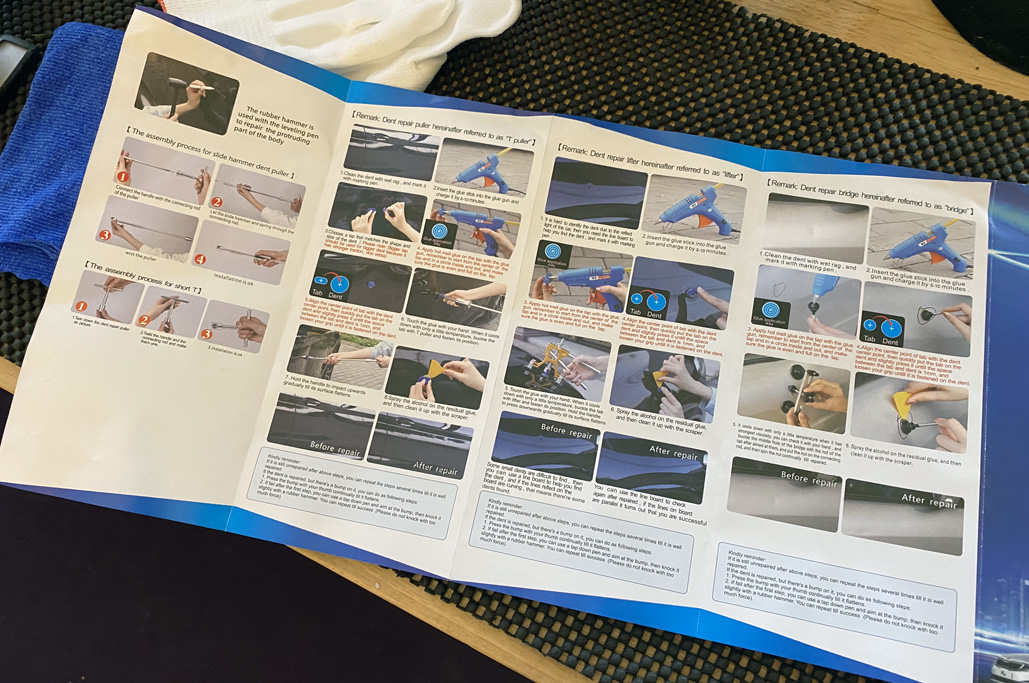
BTW, the kit came with a minimal set of instructions on how to assemble/use the tools. Fortunately, the Internet is littered with PDR “how-tos,” DIY videos, and even a few warnings on why DIYers should leave it to the “pros.” Seriously?
Granted, there are definitely tips, tricks, and gotchas to the PDR process, but like doing other simple repairs (hardtop fix, conversion to manual) and electrical work (relay, dashcam), it isn’t rocket science. We’ll see if we’ll have to eat our words. LOL.
Links to items mentioned:


Leave a comment