
Cereus : The Queen of The Night
Seriously, THE most amazing bloom in the RainyDayGarden!
Background
Cereus cacti are native to South America, particularly east of the Andes Mountains. They are also found in the southern Caribbean islands. Specific countries include: Argentina, Brazil, Uruguay, and Paraguay. While some species are cultivated elsewhere, their natural habitat is primarily within these South American regions.
Cereus, specifically the Night Blooming Cereus, primarily reproduces asexually through cuttings. It can also reproduce sexually via seeds, but propagation from cuttings is generally faster and easier.
Cereus flowers are short-lived: some, like the Selenicereus grandiflorus, bloom only once a year, for a single night, although most of them bloom multiple flowers over several weeks, each of which opens for only a single night. Other names for one or more cacti with this habit are princess of the night, Honolulu queen (for Hylocereus undatus), Christ in the manger, dama de noche, and queen of the night (which is also used for an unrelated plant species).
The lifespan of a Cereus cactus plant varies greatly—depending on the species and environmental conditions—but they generally live for many decades, even centuries. Some species, particularly those cultivated as houseplants, can live for 200 years! In the wild, they may survive for a couple of decades.
Queen of The Night
2021-2022
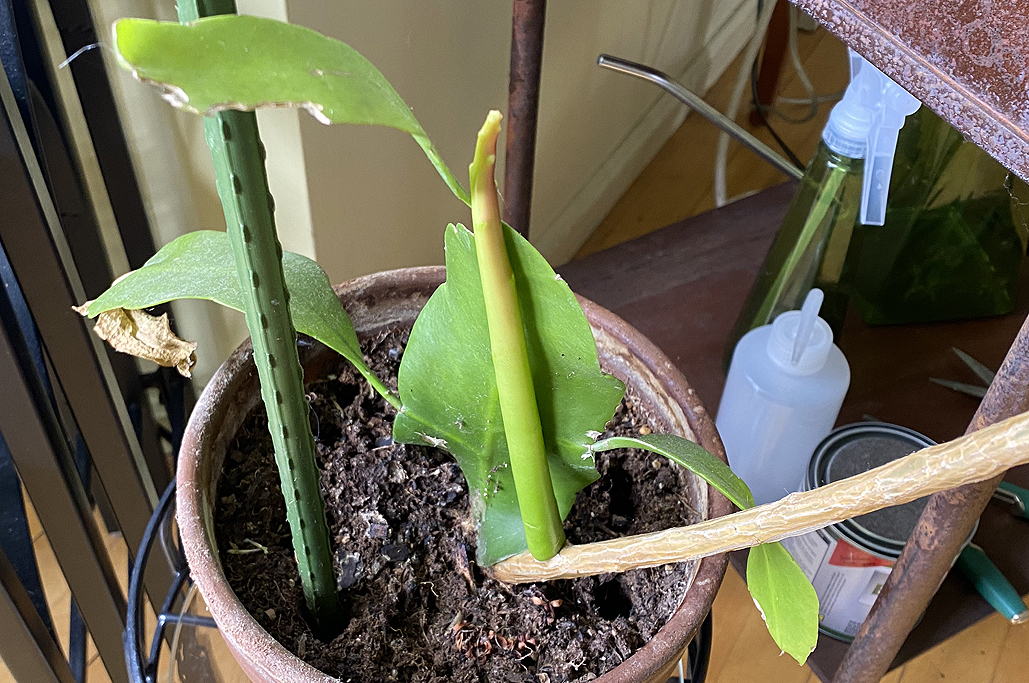
Our Cereus cutting was gifted to RainyDayGarden by Elizabeth Duncan, a local gardener, in April 2021.

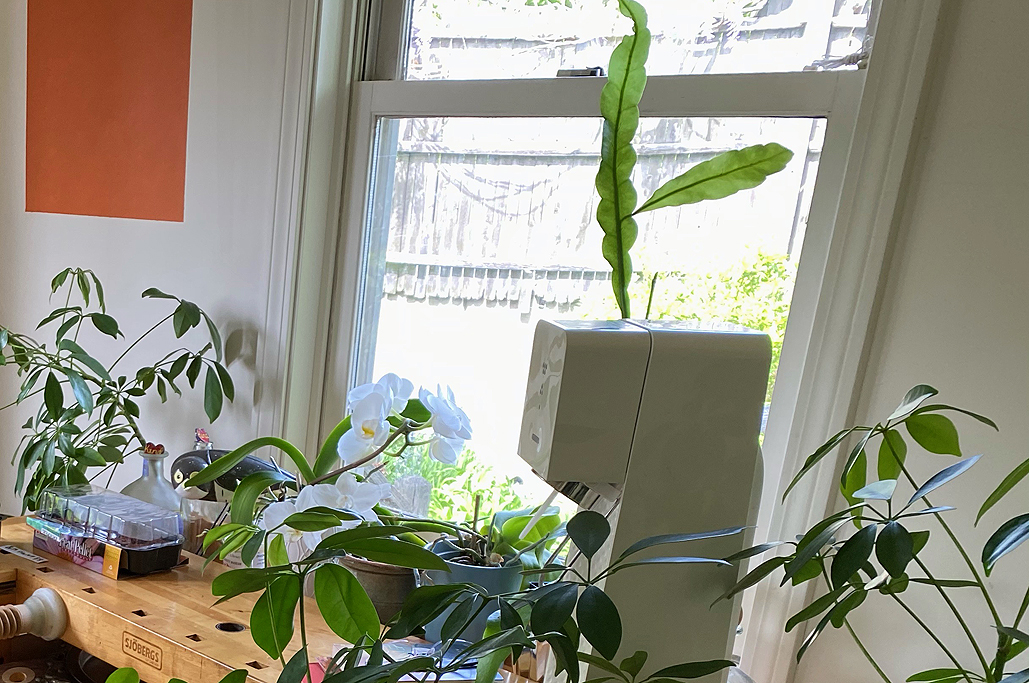
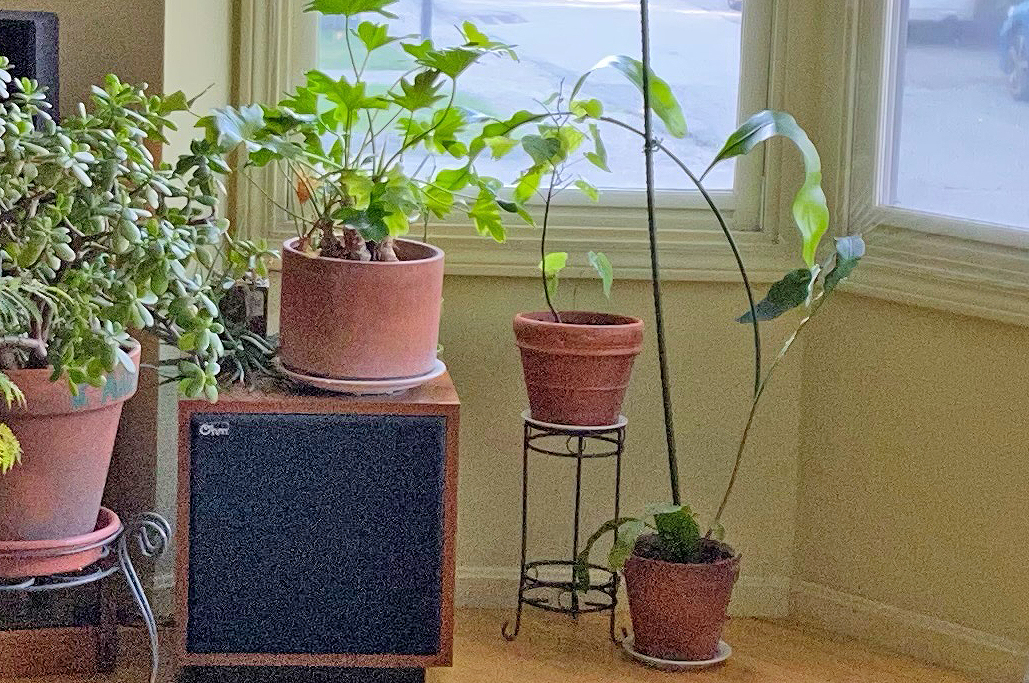
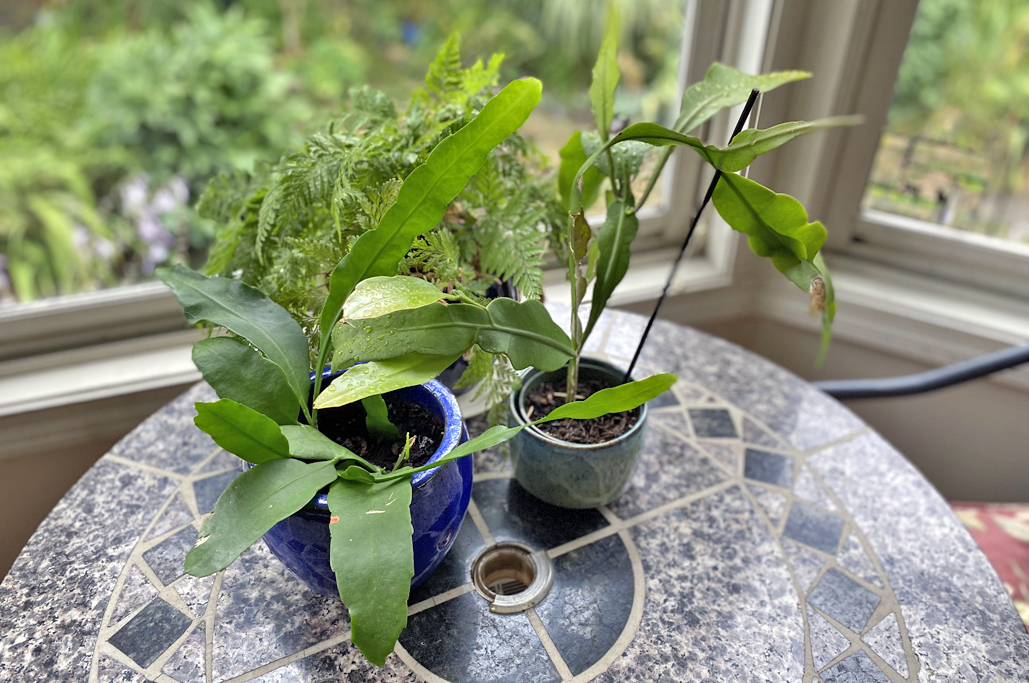
We didn’t know much about the plant, so we plopped it in a pot, and pretty much ignored it for a few years. We rotated it, moved it around, but pretty much left it alone to do its thing, which, while not exciting per se, seemed to make it quite happy 🙂

2023
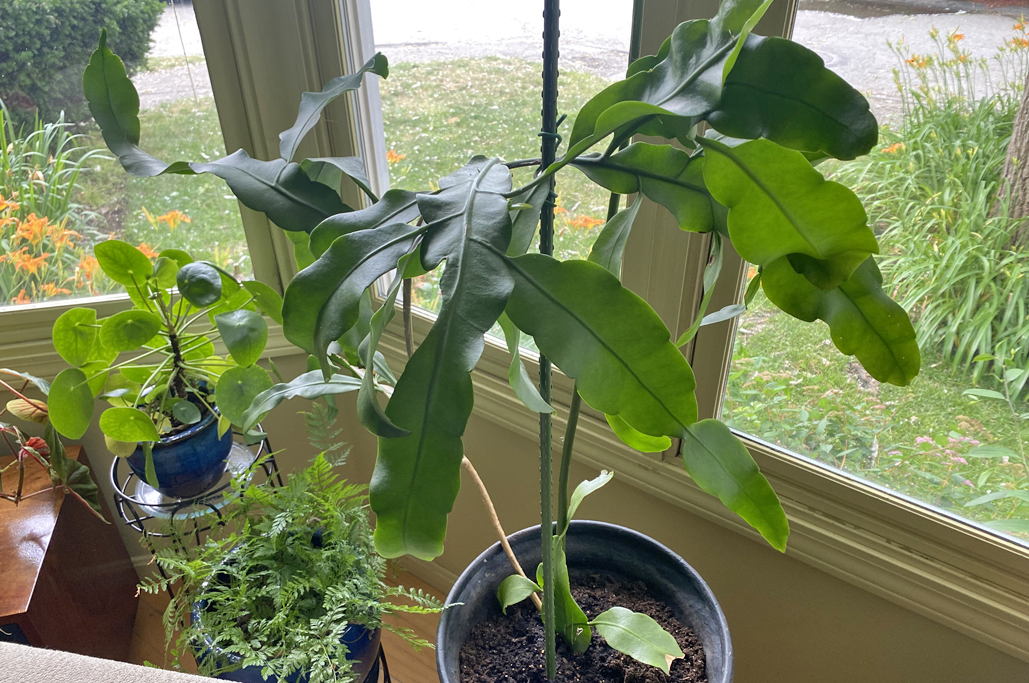
Our Sereus plant stayed alive, and for two years did nothing but sprawl and put out long, shiny leaves.

2024
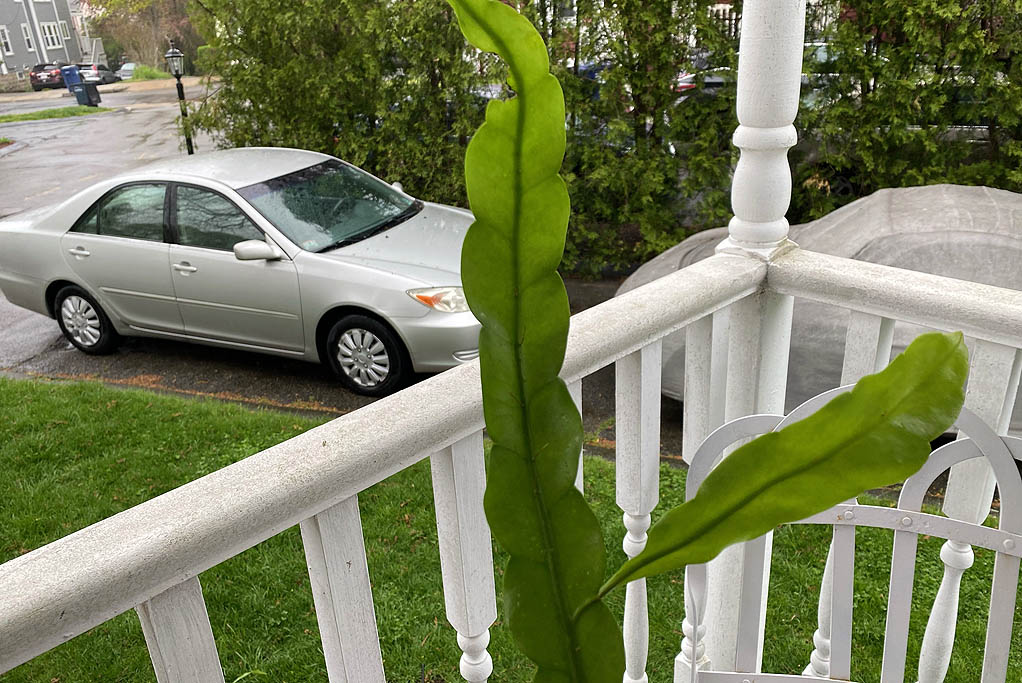
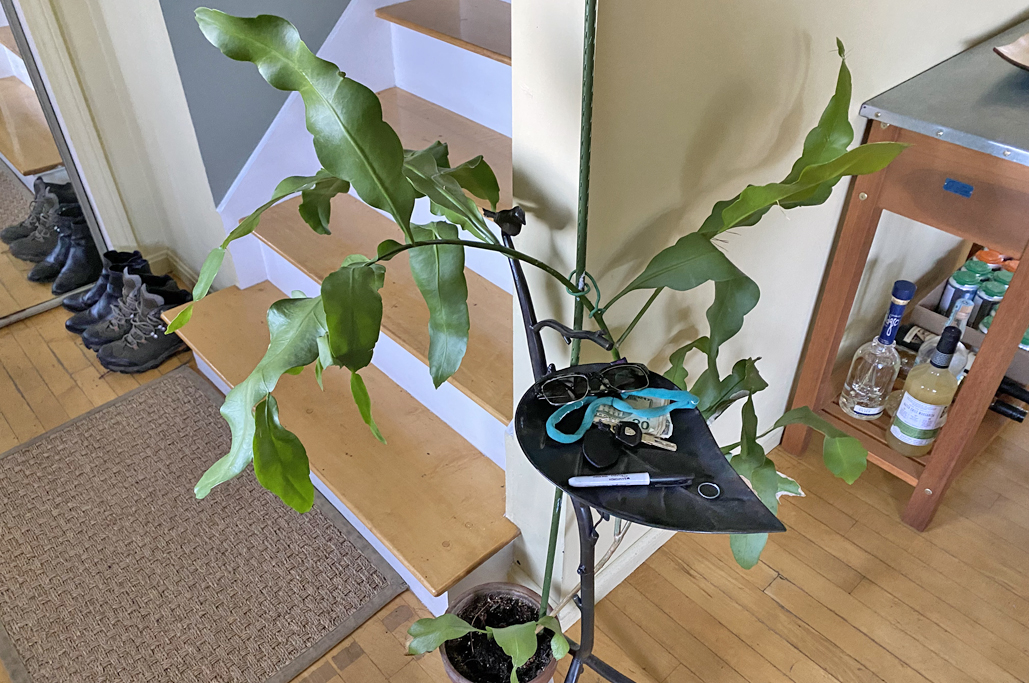
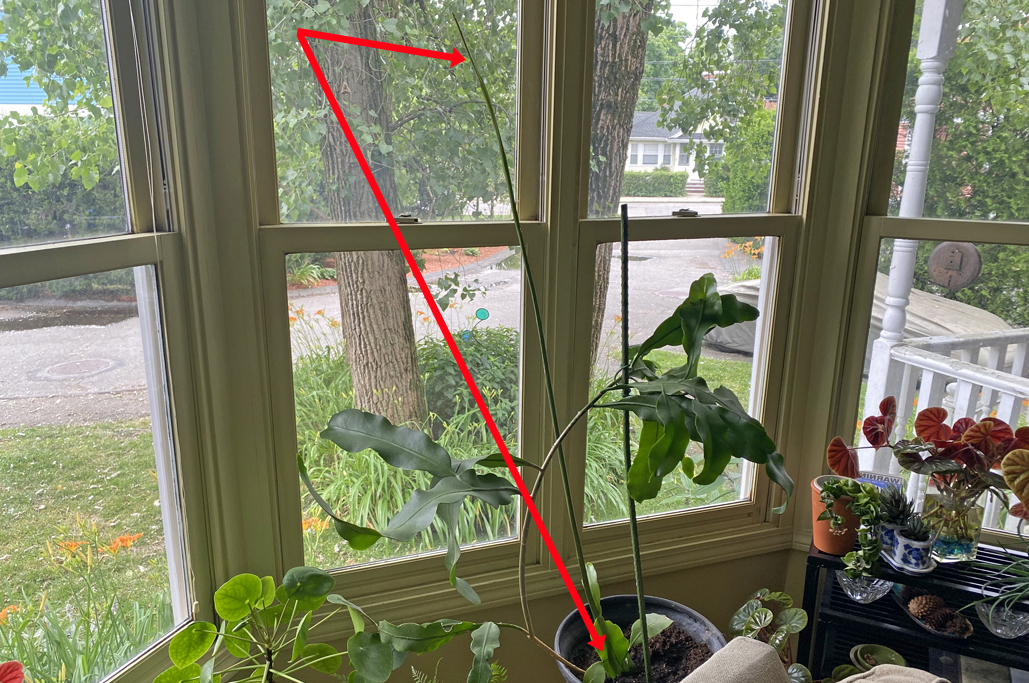
For years, we had done nothing different, just the normal “water when dry” upkeep. However, in the Spring of 2024, the plant had a growth spurt, put out a five-foot shoot, and then continued to aggressively put out more leaves!

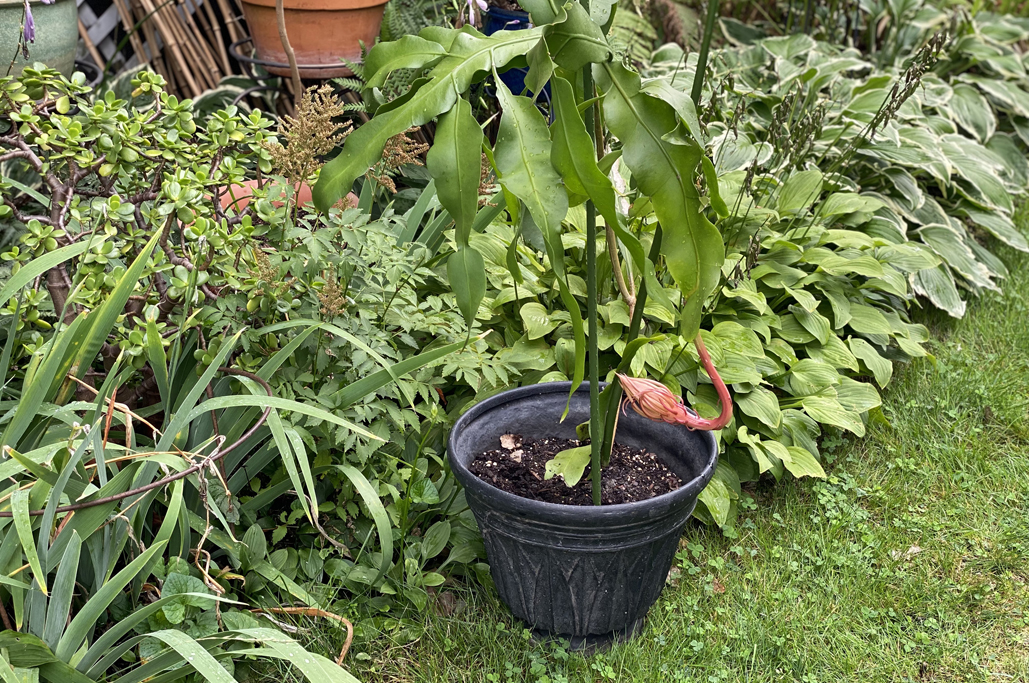
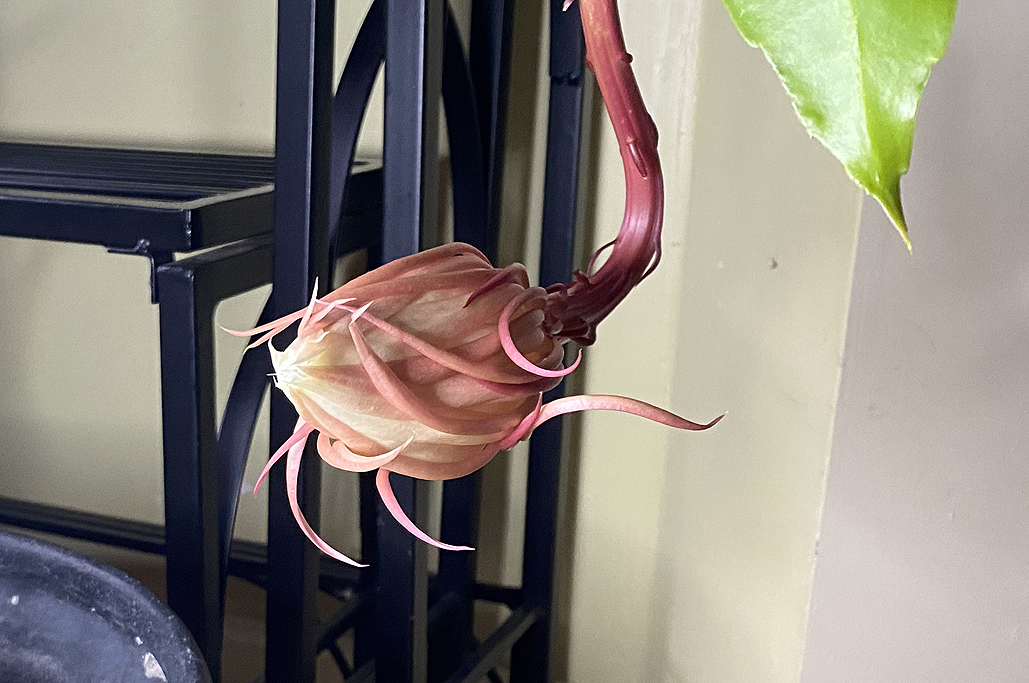
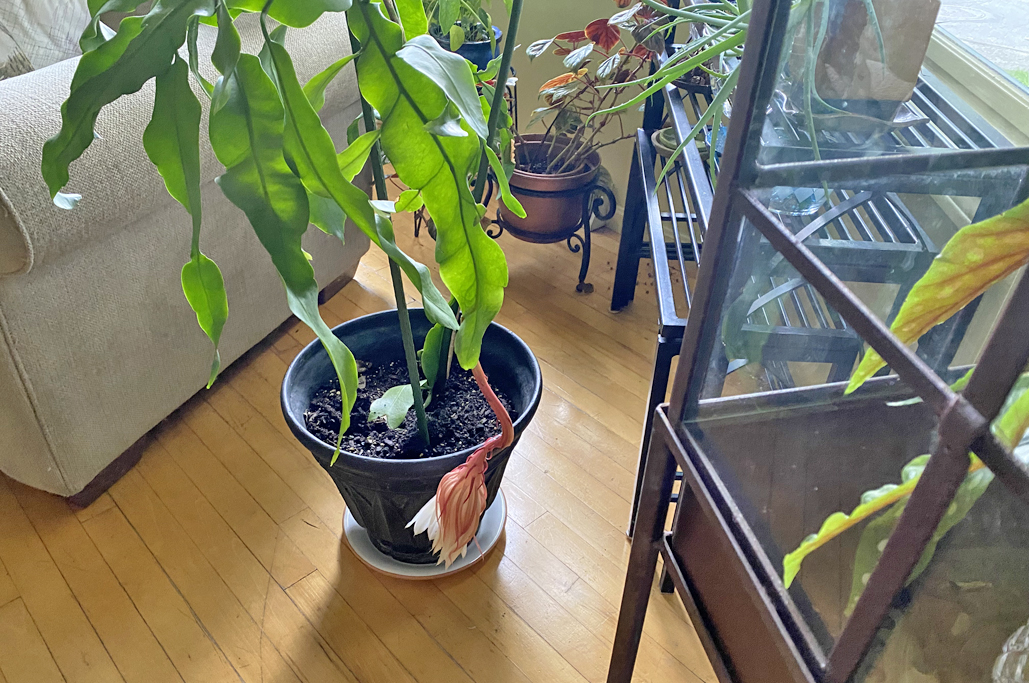
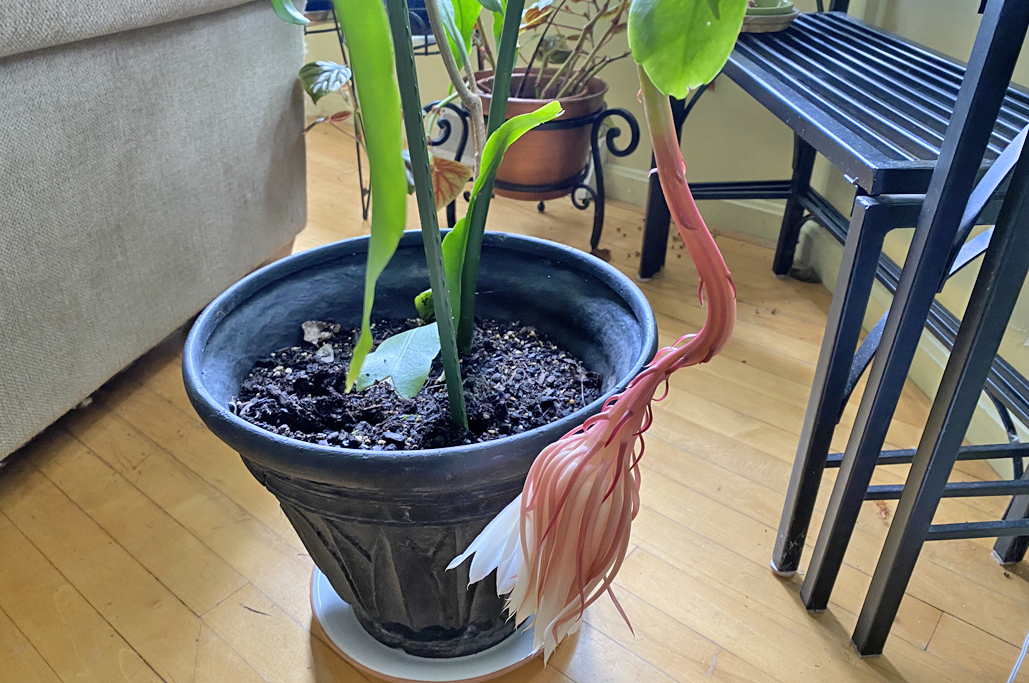
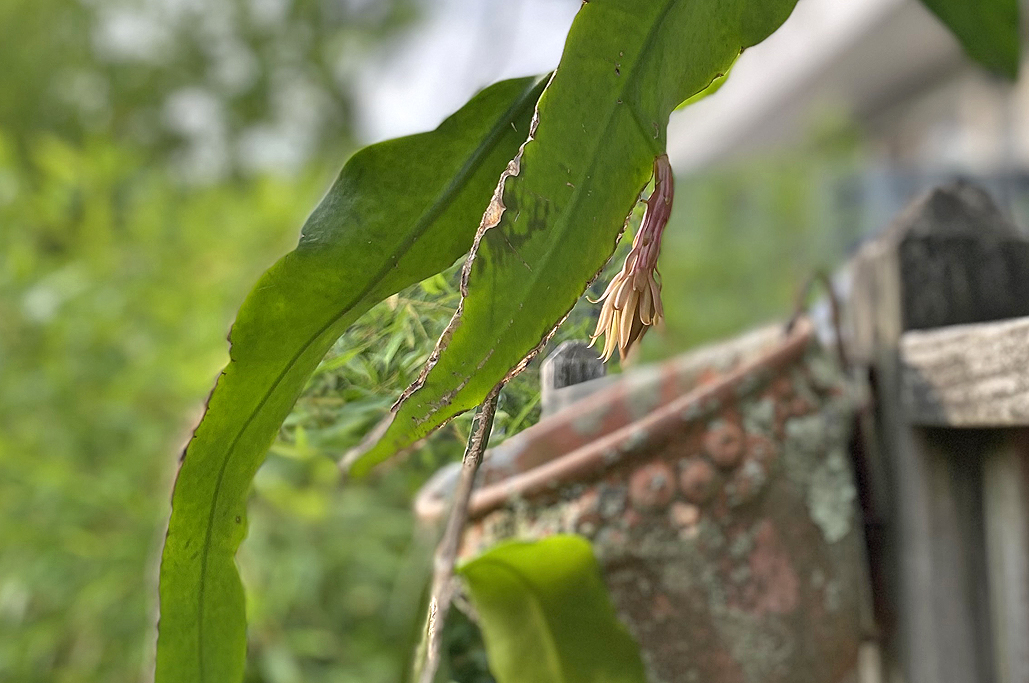
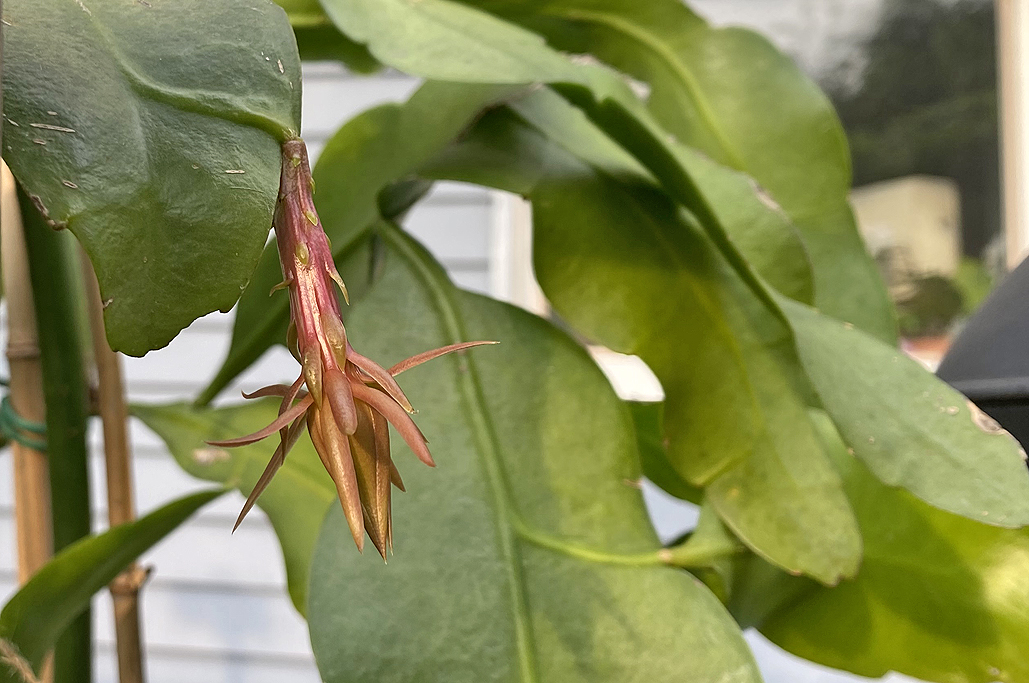
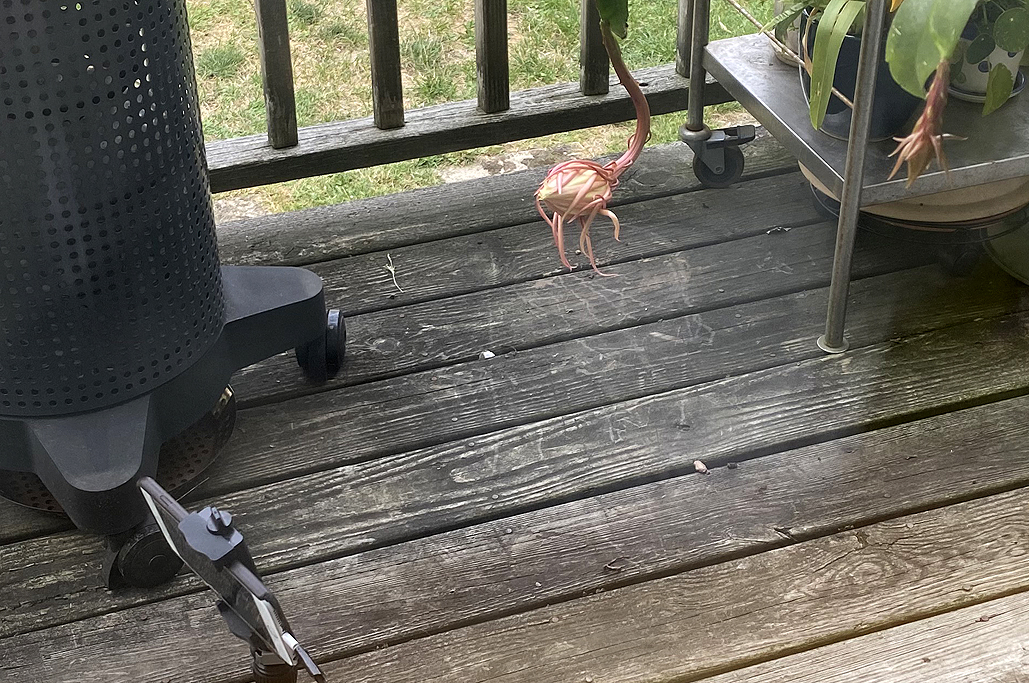
As the plant was getting rather large for indoors, we placed it outside in May, and once again forgot about it. A wind gust in August toppled the plant, and while righting it we noticed that a bud had formed! Its formation was quite far along in the process, and we were amazed at the size of the bud.

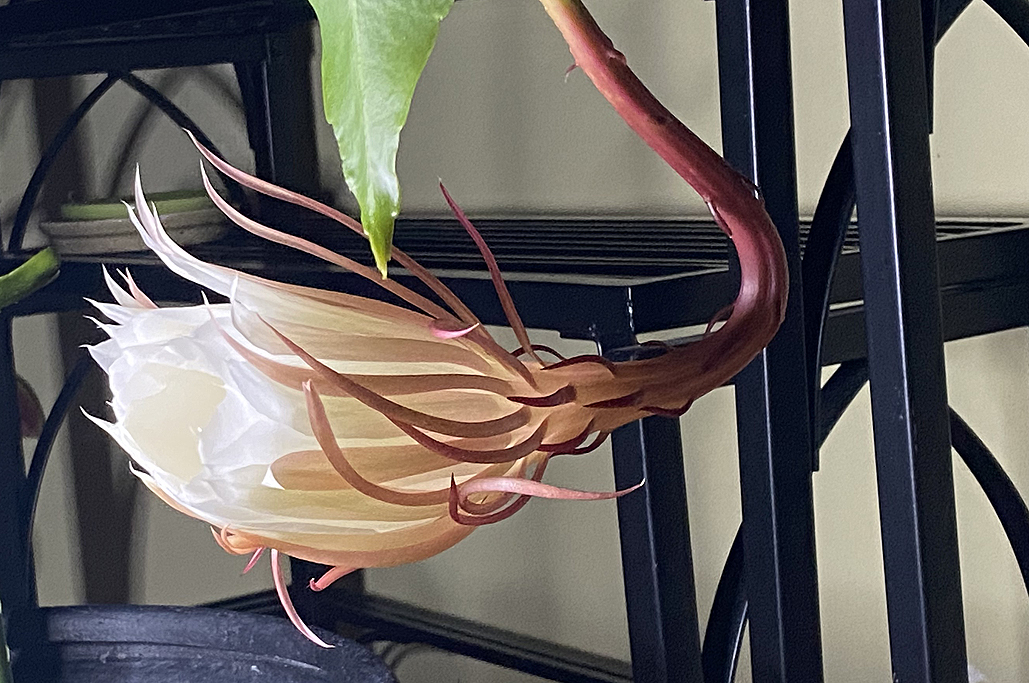
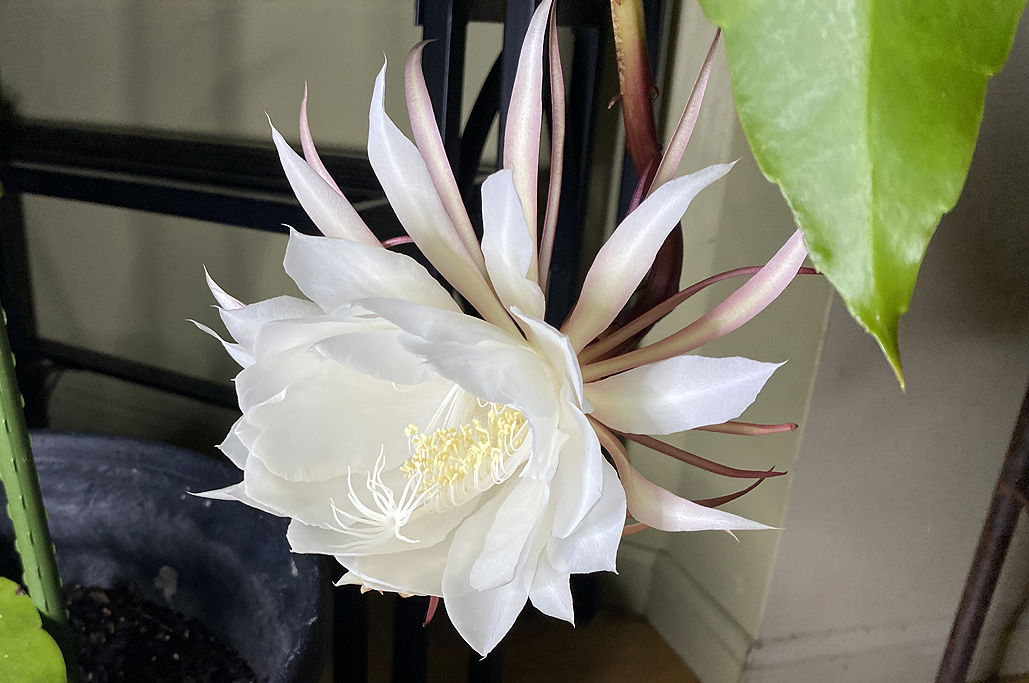
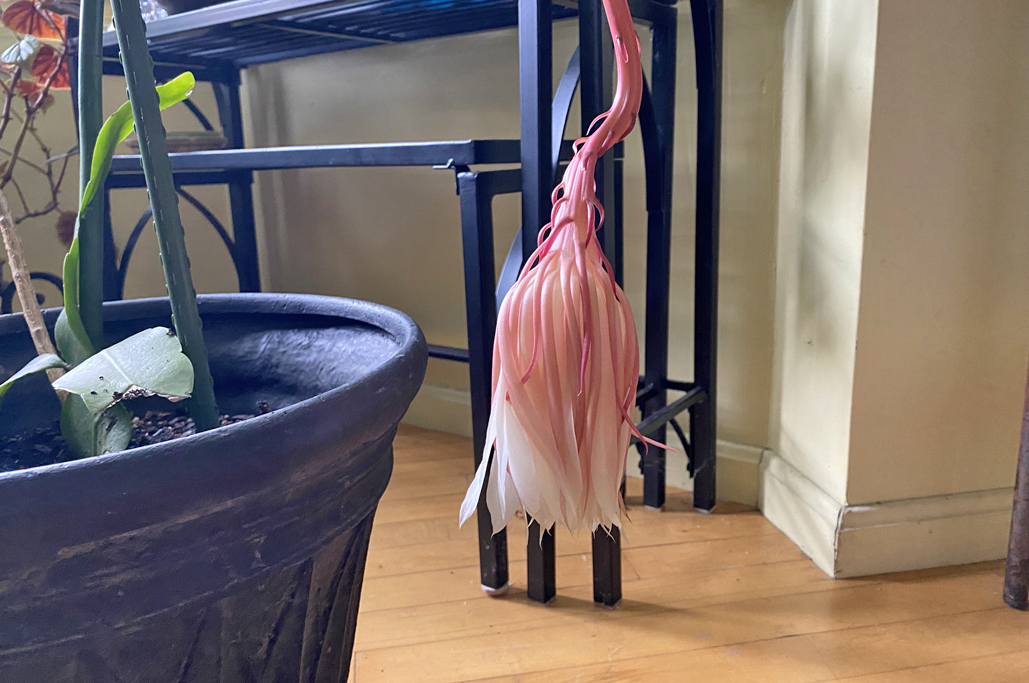
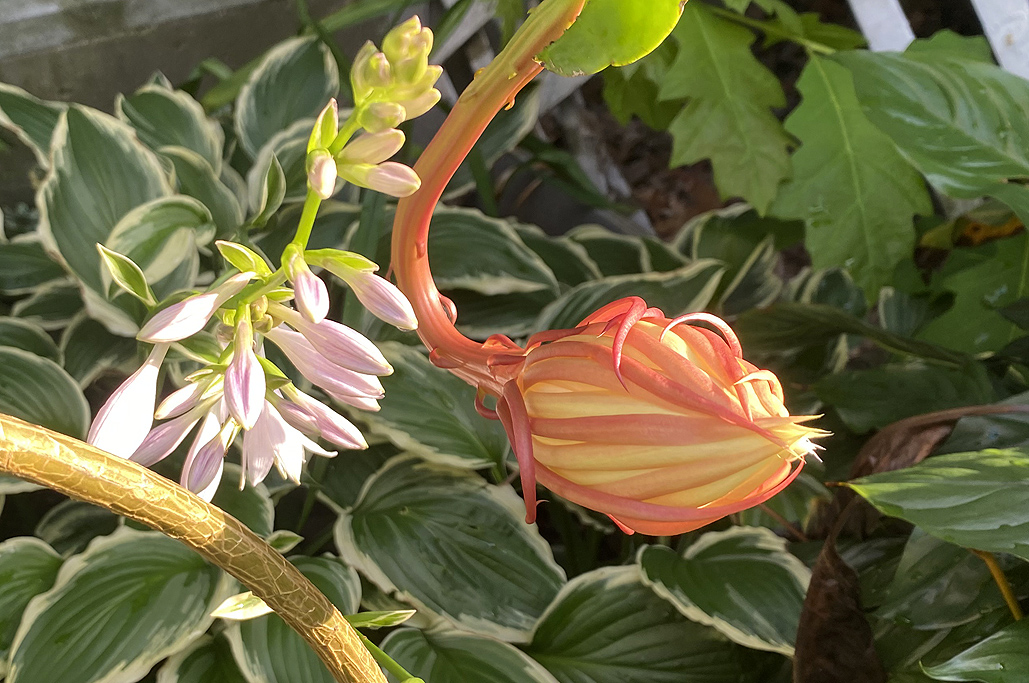
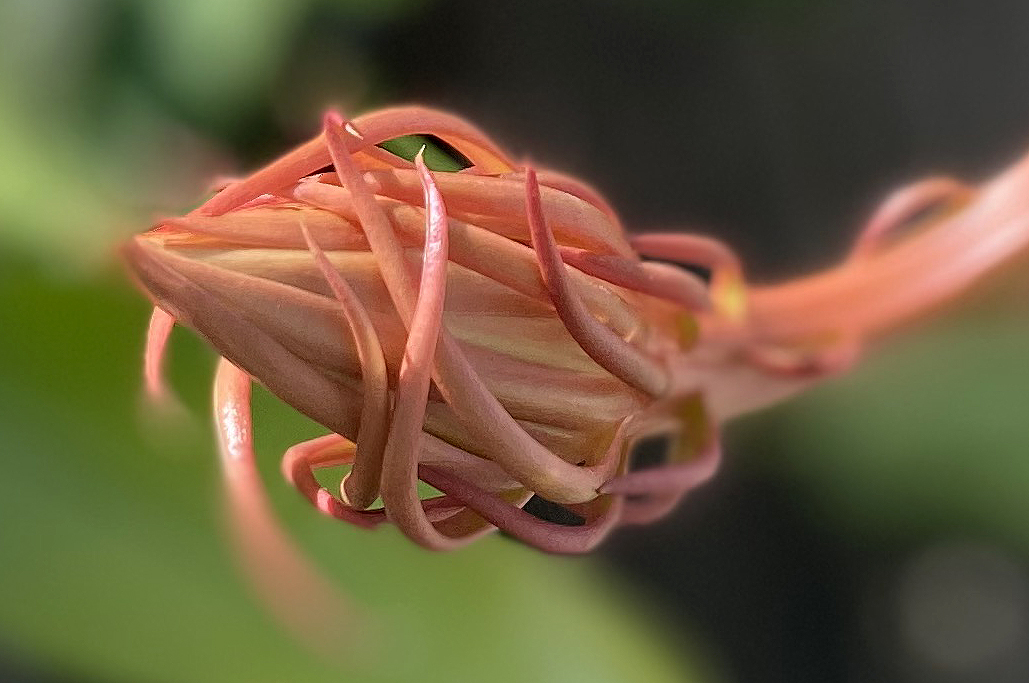
We moved it inside to watch the progress of its opening. The process started around 6 PM and was fully opened by 10 PM.

From this to this…

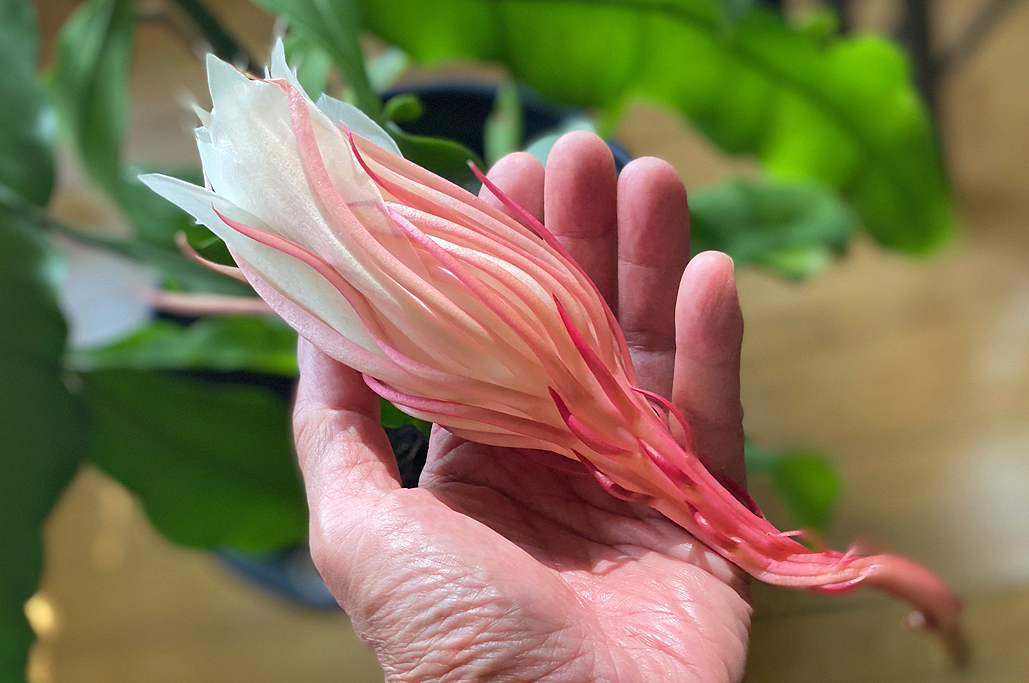
to this!
The flower stayed open for a number of hours, but by morning had closed and faded.

Poor girl, she was so intriguing and lovely while she lasted…
2025
After four years, the Cereus plant now has multiple buds and flowers once every few weeks! We now have ample opportunities to study the Cereus flower in detail.

Because the span is so brief, each time it opens, we will focus on a specific aspect of the blossom. By the end of this season, we hope to have detailed images of all aspects of the flower.

14 hours in 30 seconds
The most recent flowering was captured in this fourteen-hour time-lapse.
Time-lapse Setup
After having done it a few times, both inside and out, we have learned that time-lapse using a DSLR requires a lot of complicated setup, calculations, etc. A MUCH simpler way is to use a smartphone.

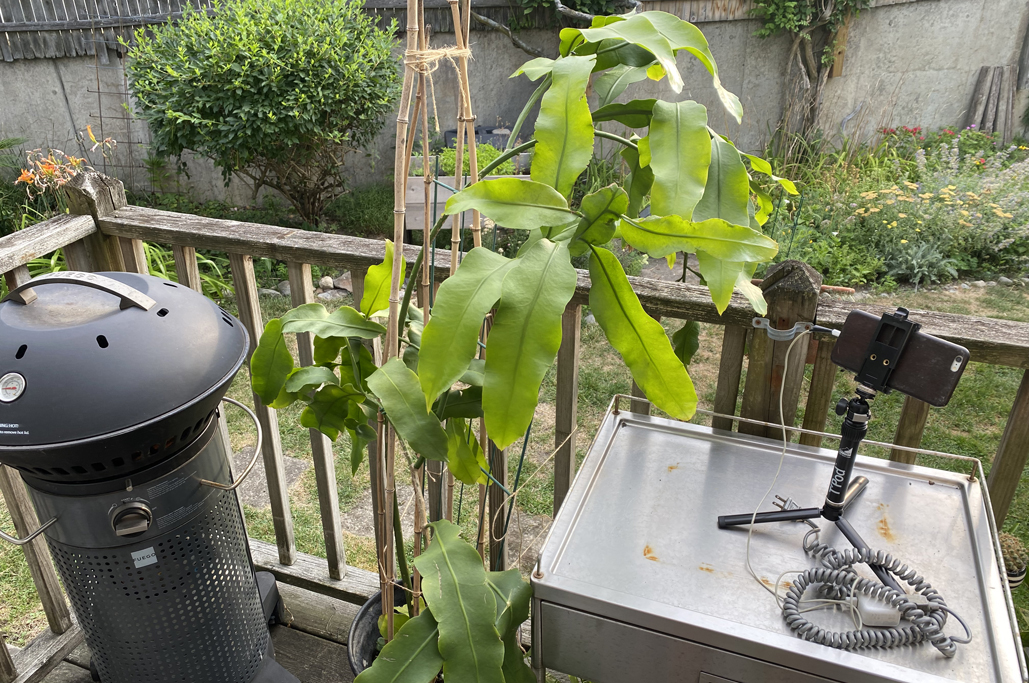
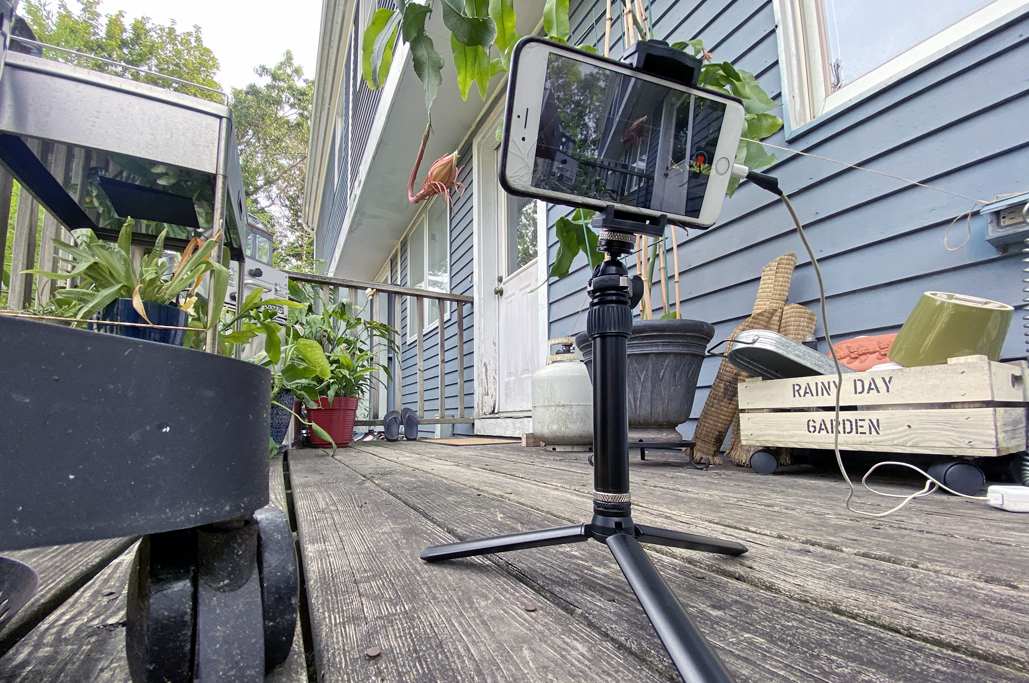
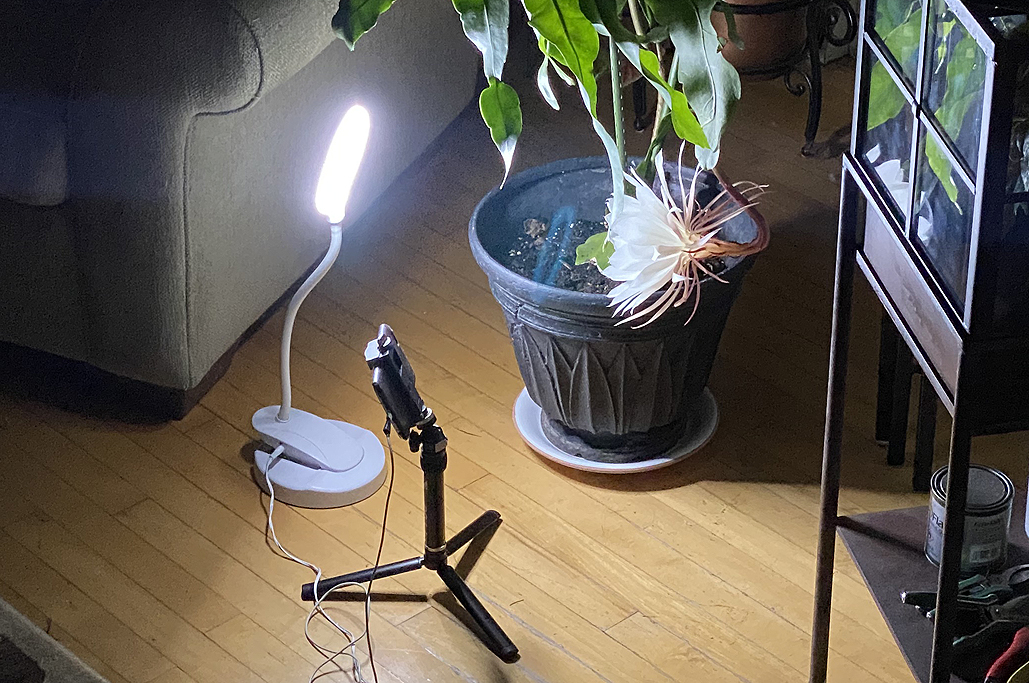
The setup for a timelapse with an iPhone is ridiculously simple. All we needed was the following:
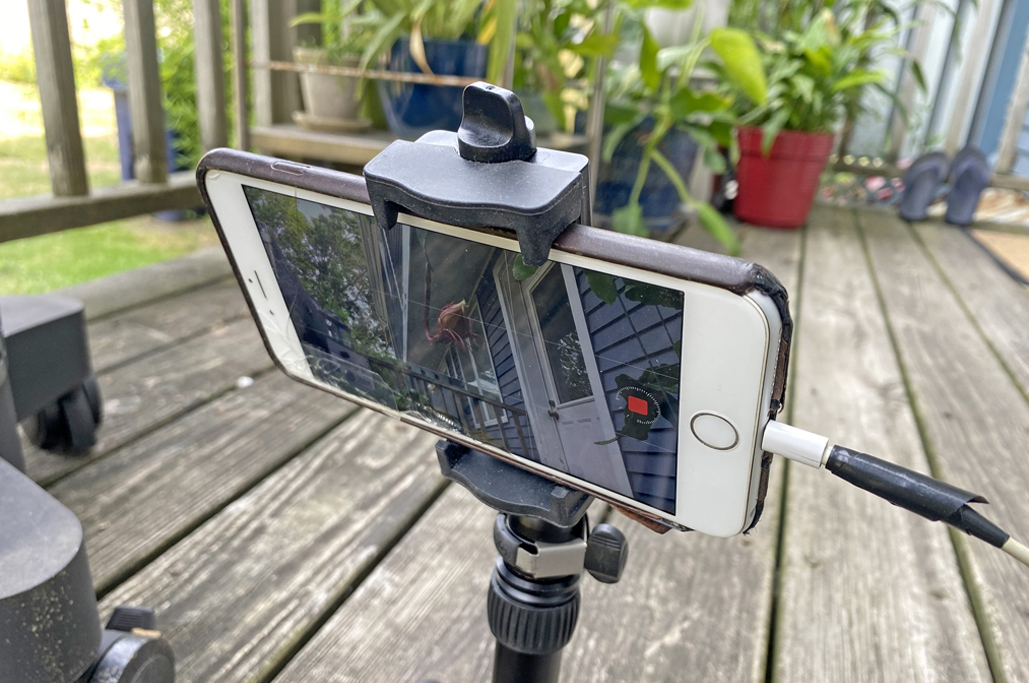
- iPhone and holder,
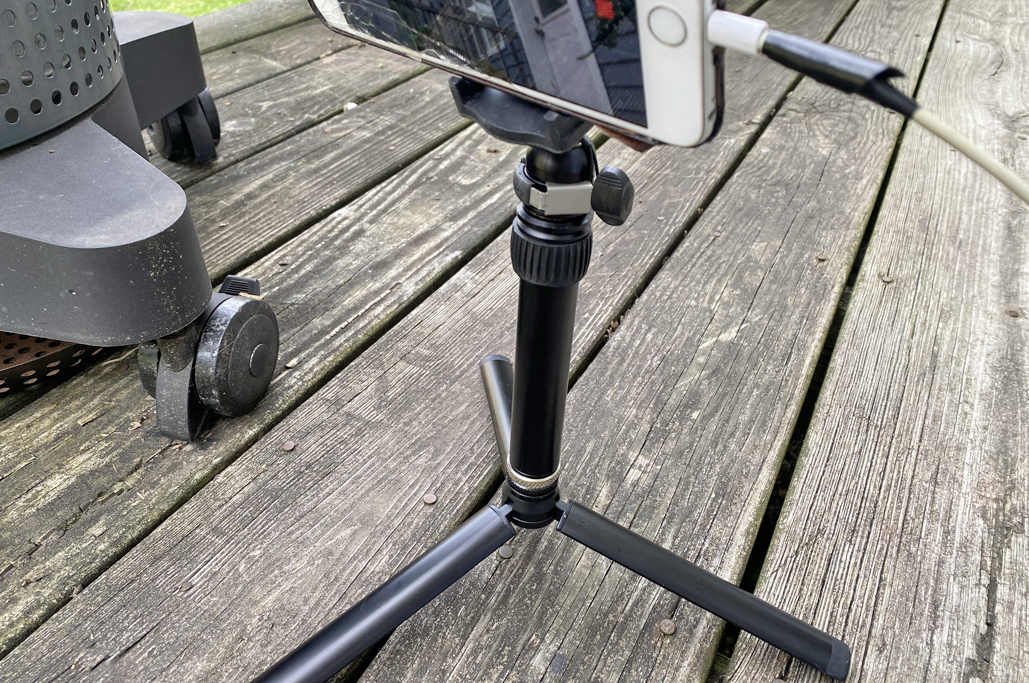
- Small sturdy tripod,
- LED light source, and
- Phone charger and extension cord.
For a long time-lapse, we do not rely on the battery of the iPhone. Instead, we power the phone directly from the wall socket.
The standard Camera app has a mode called “Time-Lapse.” The older version has zero setup. Just press the “Go” button and it does everything! Two things to be sure to do are: 1: tap on the thing you want in focus to set the focus point; 2: set “Auto-Lock” to “never” so the phone will not turn off.

FinalThoughts
The Cereus cactus has been a fascinating addition to the RainyDayGarden, both from a horticultural as well as a photographic perspective. The plant is an absolute “no-work” addition to the RainyDayGarden collection, is intriguing every time it blooms, and is marveled at by all who are fortunate enough to bear witness to its flowering.

We have propagated a few cuttings in pots and will pass them on to others once they are well established! This amazing plant should be enjoyed by as many gardeners as possible 🙂
Links to items mentioned:


Leave a comment