
TORRAS Neck Fan: FirstLook
Portable Air Conditioners? Cool!!!
Fans made of leaves have been around since ancient Egypt. Manually operated rotary fans were invented back in the Han dynasty (fl. 180 CE). In the late 1880s, Schuyler Wheeler invented a fan powered by electricity, and the desktop version came soon after. Variations were introduced (ceiling, standing, oscillating, etc.) over the years, but the basic principles stayed the same.
In 1981, Toshiba created a fan that had no exposed fan blades or other visibly moving parts, but it was not until Dyson introduced the Dyson Air Multiplier in 2009 that the “bladeless” fan became well known.
However, the basics of cooling had not changed much…until now.
Neck Fans
Recently, a new category of fans has been making waves. These fans cool the wearer by taking advantage of the effect of evaporative cooling of sweat around the neck. They are called “neck fans.”
The neck has some of the body’s larger blood-transporting vessels. By focusing the airflow on and around the neck, neck fans cool blood in the large vessels that lie close to the surface. Additionally, when the back of the neck is cooled, it also cools the brainstem, which is the part of the brain that senses and regulates body temperature, creating a sensation of cooling throughout the body.
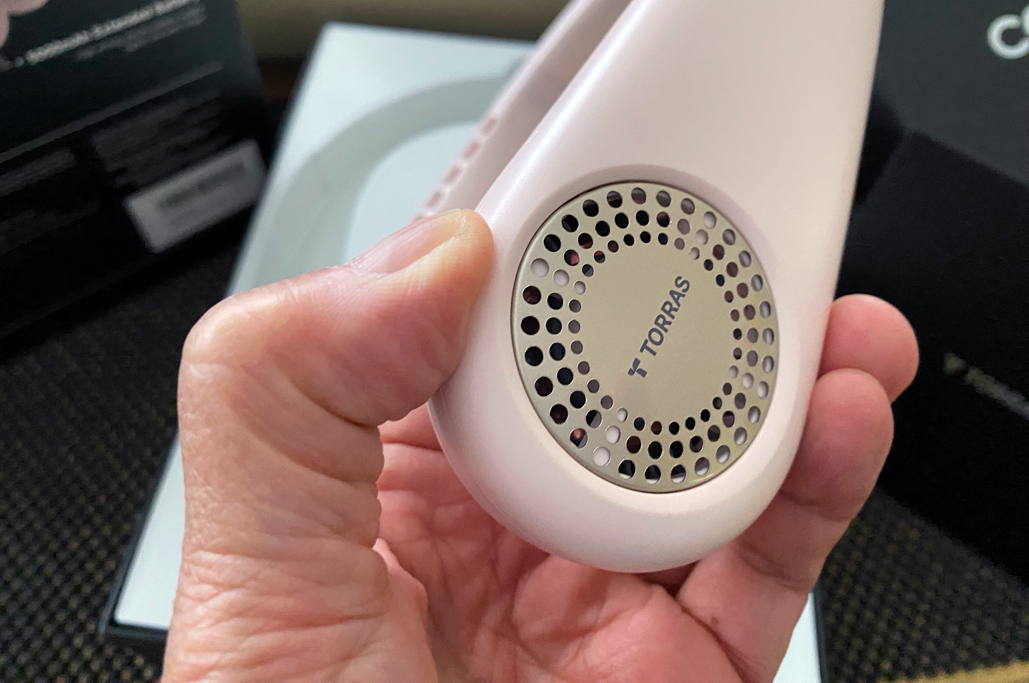
TORRAS
Some fans, like those made by TORRAS, incorporate cooling plates using thermoelectric technology to actively cool the skin, further enhancing the cooling effect.
Thermoelectric coolers (TEC) operate by the Peltier effect (one of three phenomena that make up the thermoelectric effect). Two significant benefits of TEC systems are that they have no moving parts and are current-controlled. This means that the flow of heat is directly proportional to the applied DC current, and heat may be added or removed by controlling the direction and amount of electric current.
Another benefit of TEC is that it does not use refrigerants in its operation. The hot side is attached to a heat sink to limit its temperature increase, while the cold side goes below the ambient temperature.
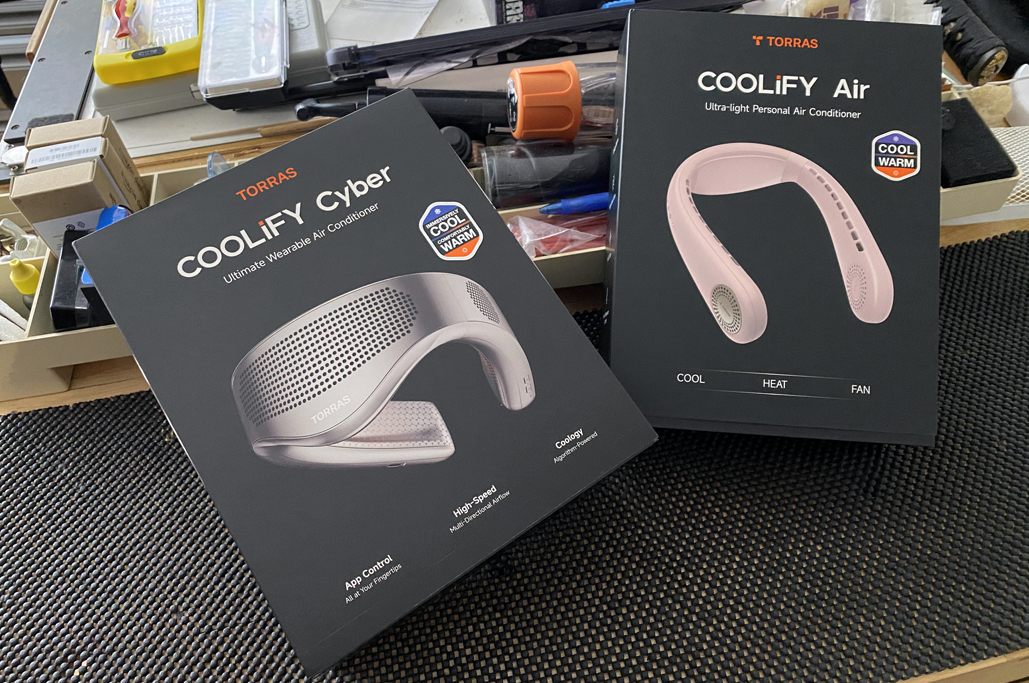
TORRAS leverages all of these features in its line of neck fans.

Coolify Cyber Fan
Spec:
- Physical buttons
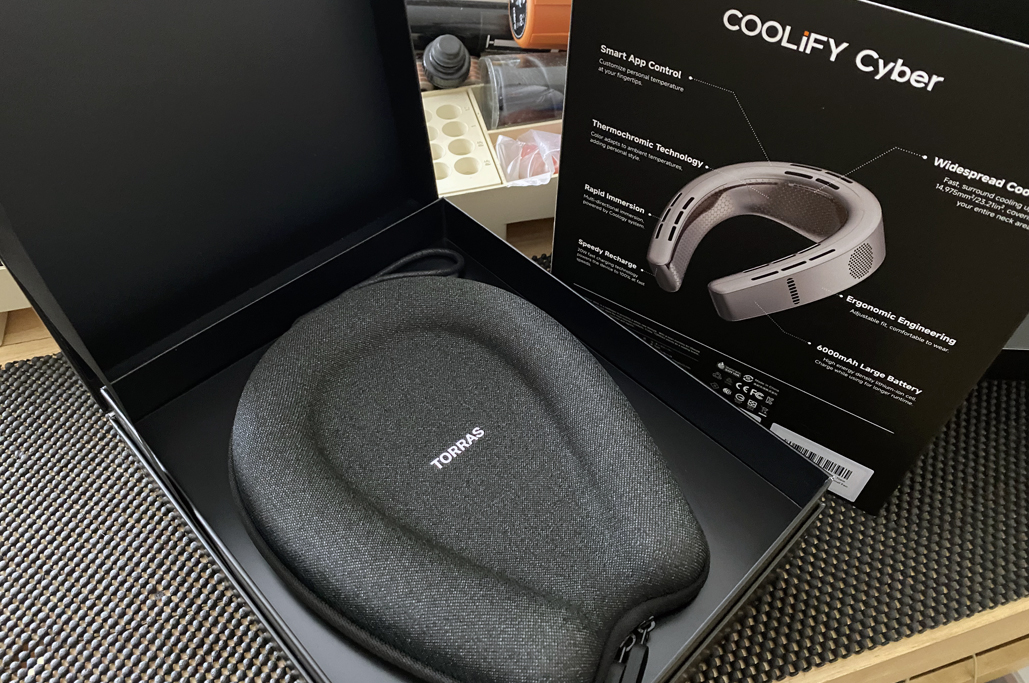
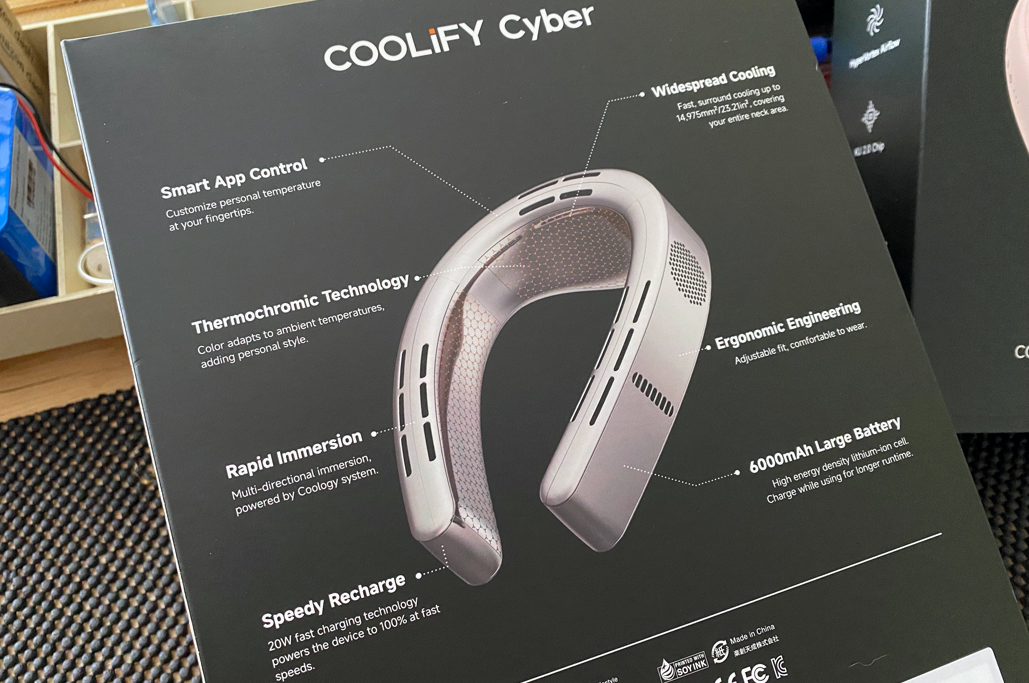
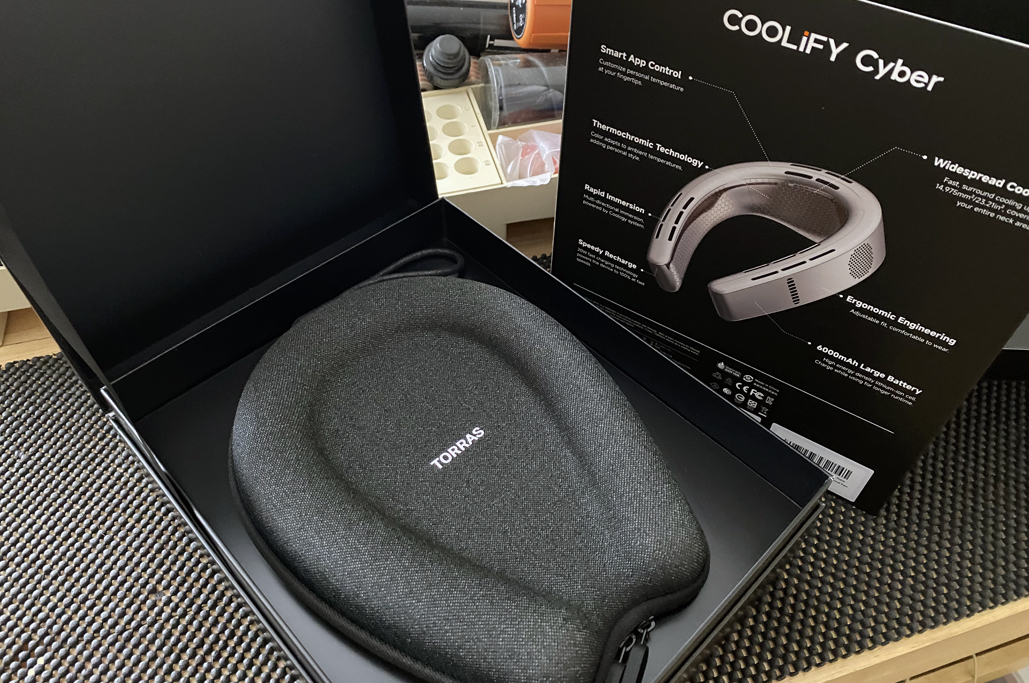
- 3 thermoelectric cooling (TEC) modules, 14,975 mm² cooling area, patented graphene thermal conductivity, and cooling particles efficiency
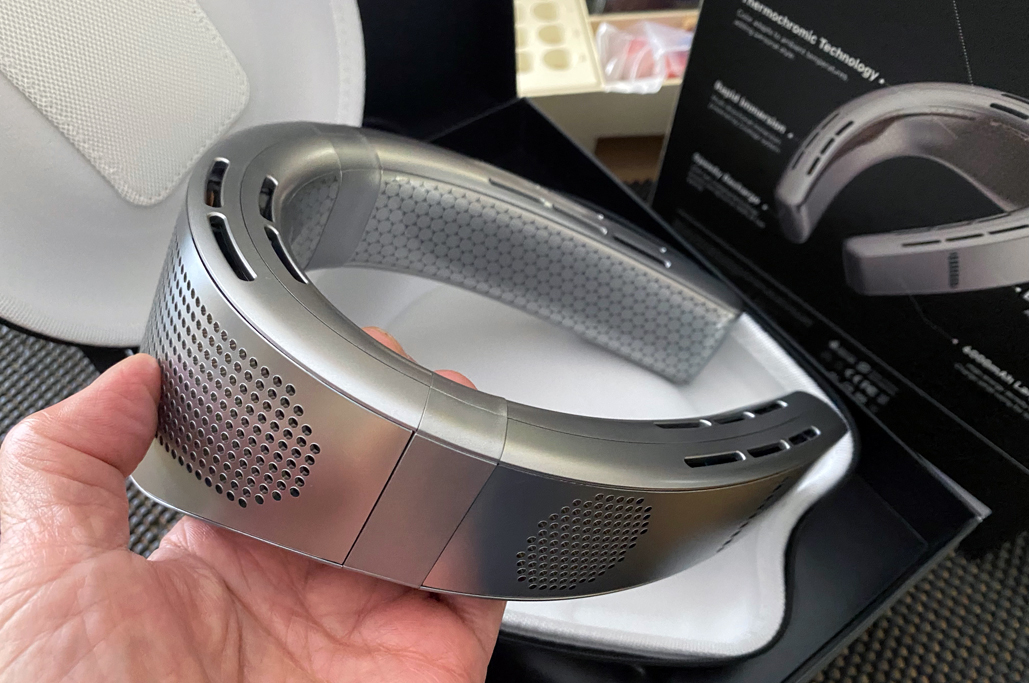
- 360° air flow – 6 upper & 2 lower air vents, 4 motors
- 3 Modes – Fan, Cooling, Heat Therapy, adjustable via app
- USB-C – Usable while charging, 6000mAh rechargeable battery
- Battery duration:
- Wind Mode(F1/F2/F3): 15.5h / 12.1h / 7.1h
- Cooling Mode(C1/C2/C3): 2.6h / 2.4h / 2.0h
- Heating Mode(H1/H2/H3): 4.5h / 4.2h / 3.3h

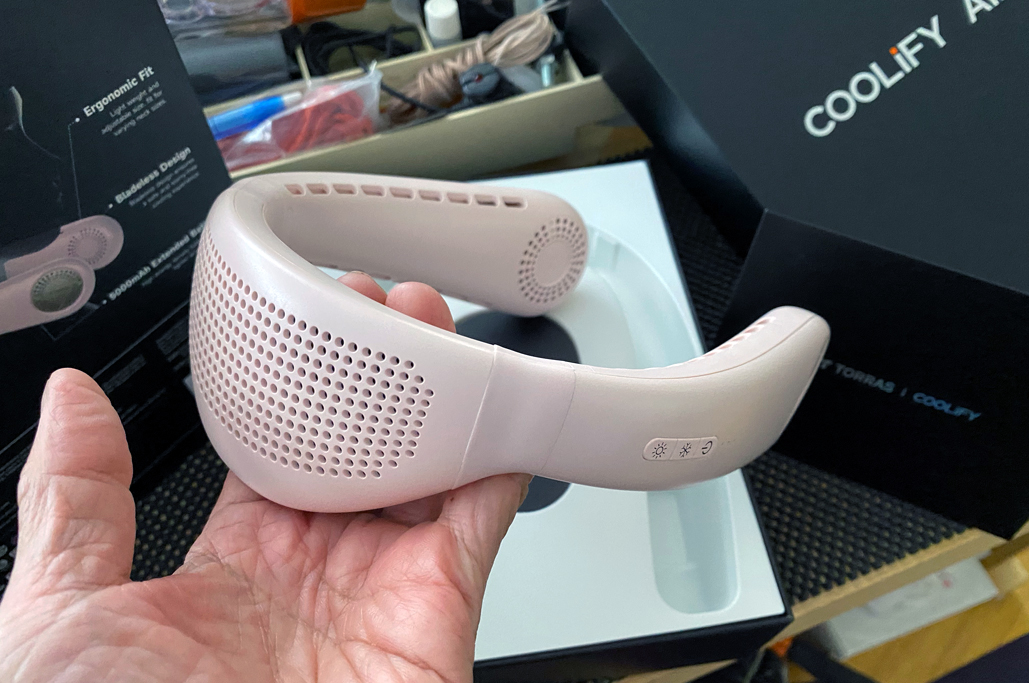
Coolify Air Fan
Spec:

FirstThoughts
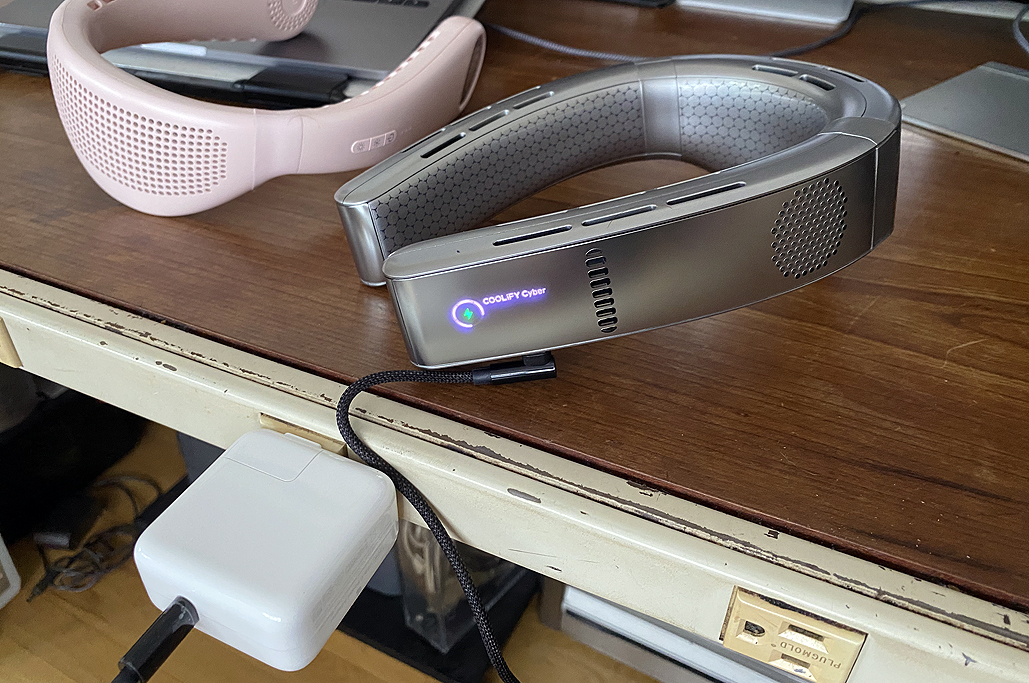
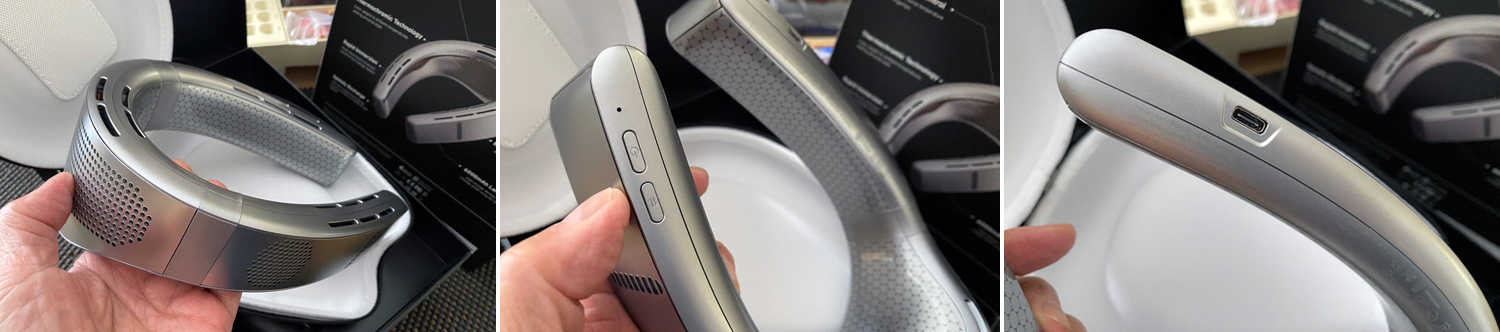
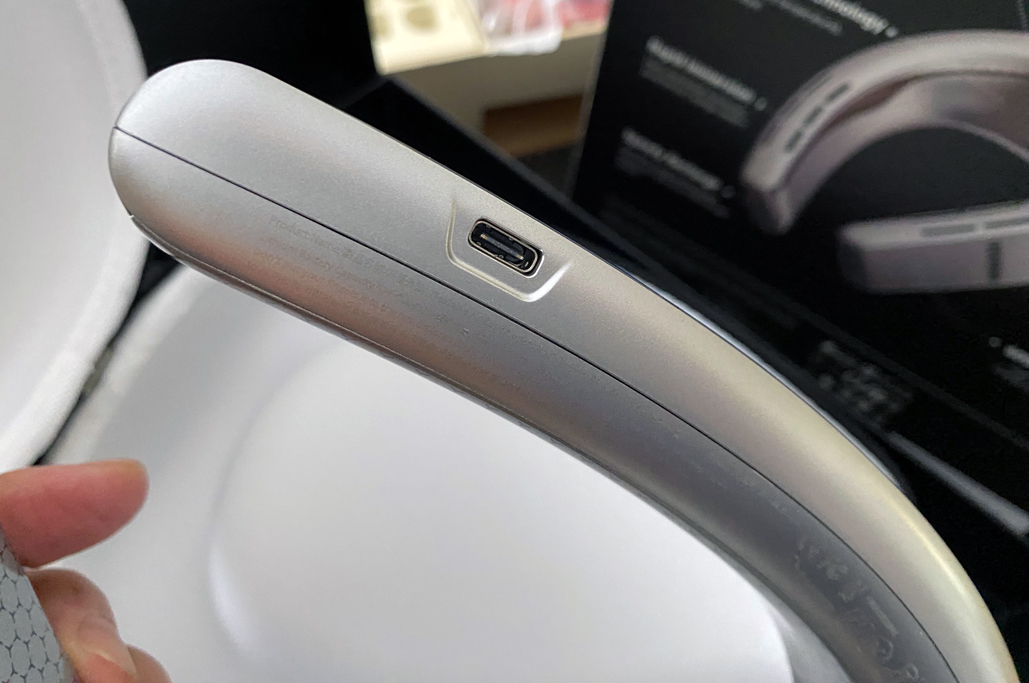
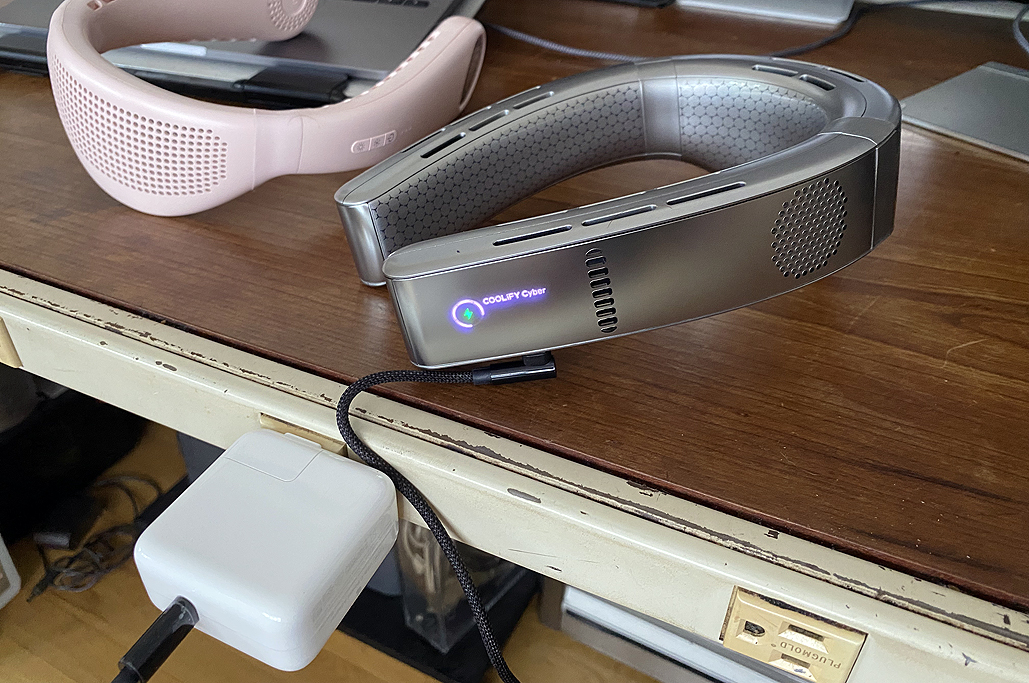
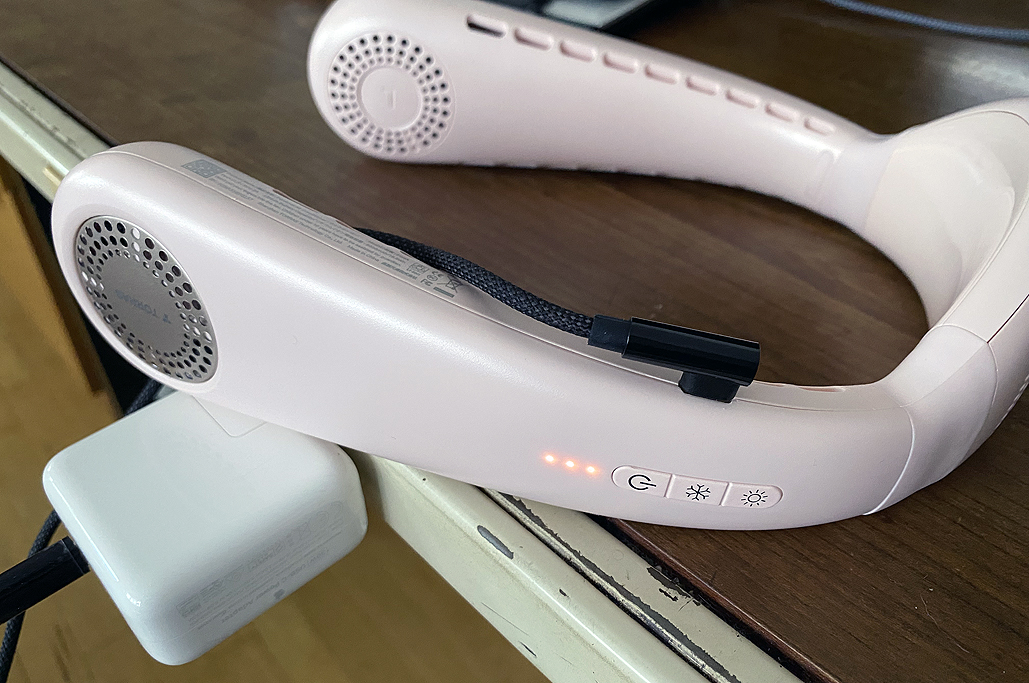
The USB-C socket is on the side of one of the arms. It is placed such that the cable is on the bottom when plugged in, assuming one wants the status display to be right-side to face up. The display will flash when charging and takes about two hours to go from empty to full.
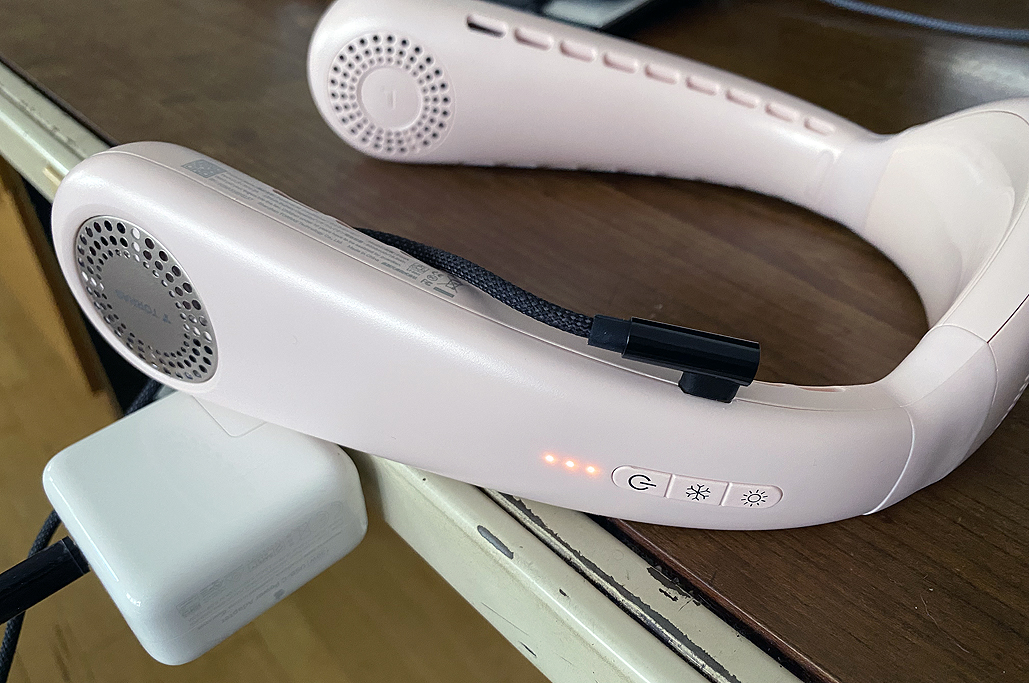
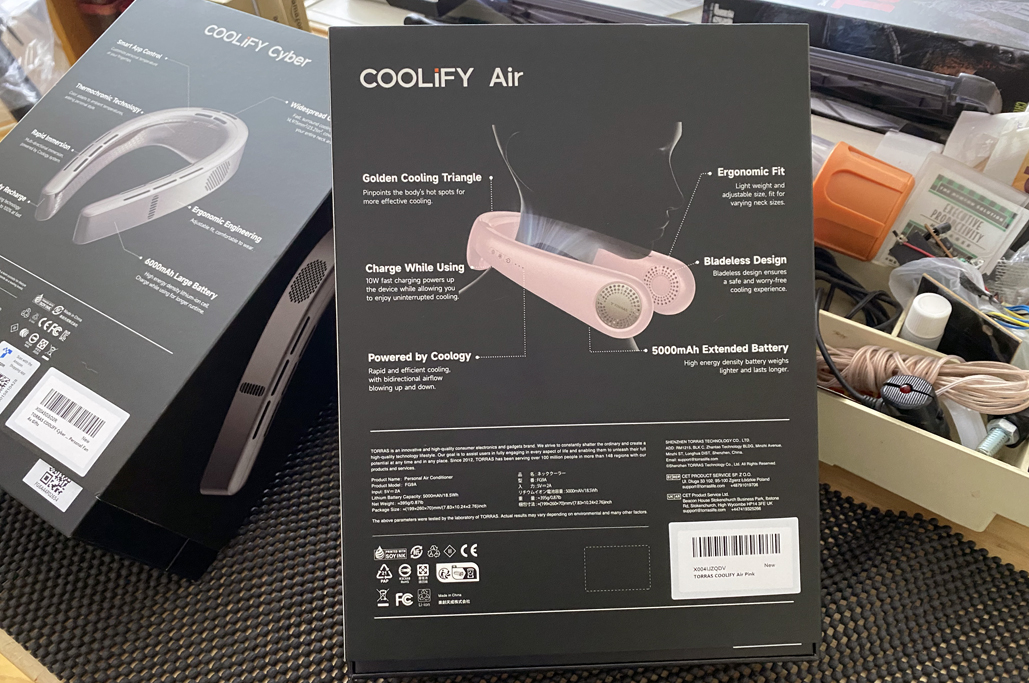
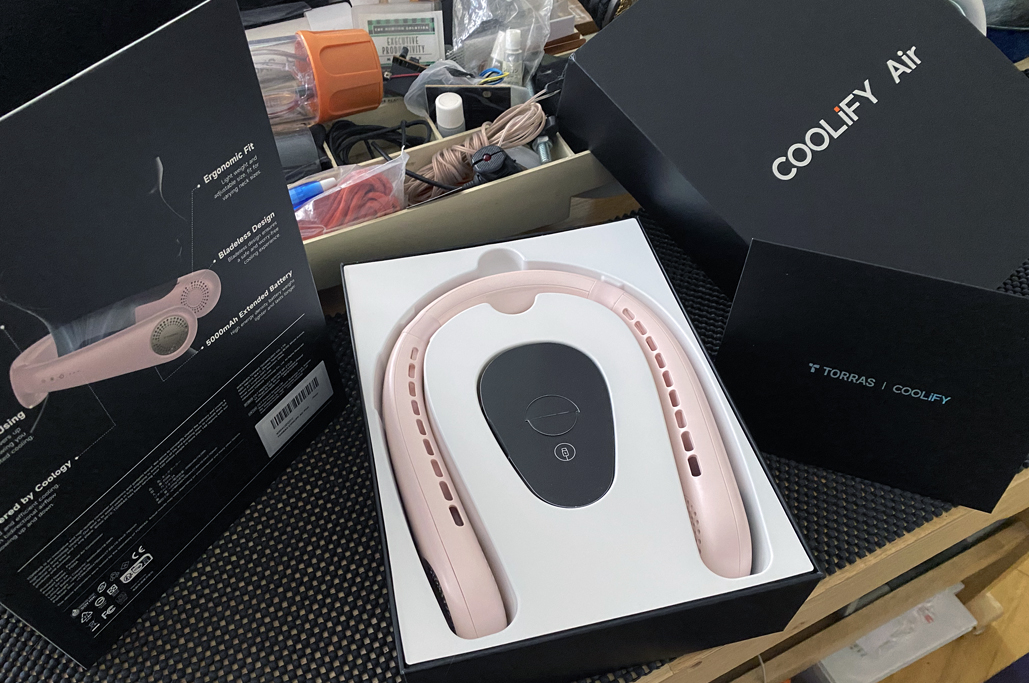
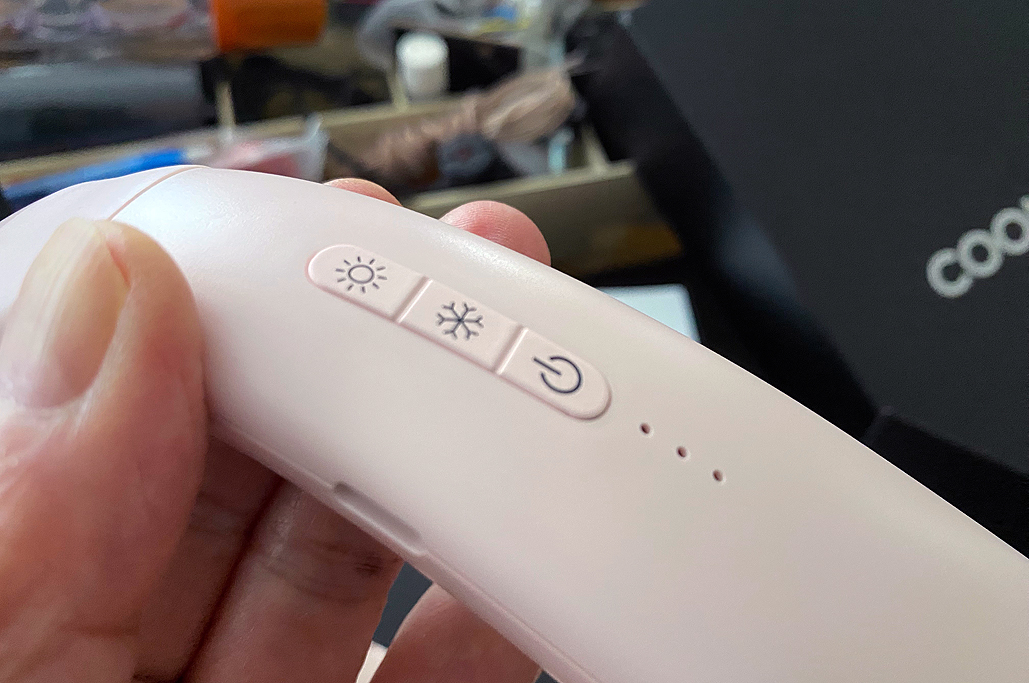
The Coolify Air also has a USB-C socket, but uses LEDs to indicate charging status. Since it is orientation agnostic, it will lie flat when charging.
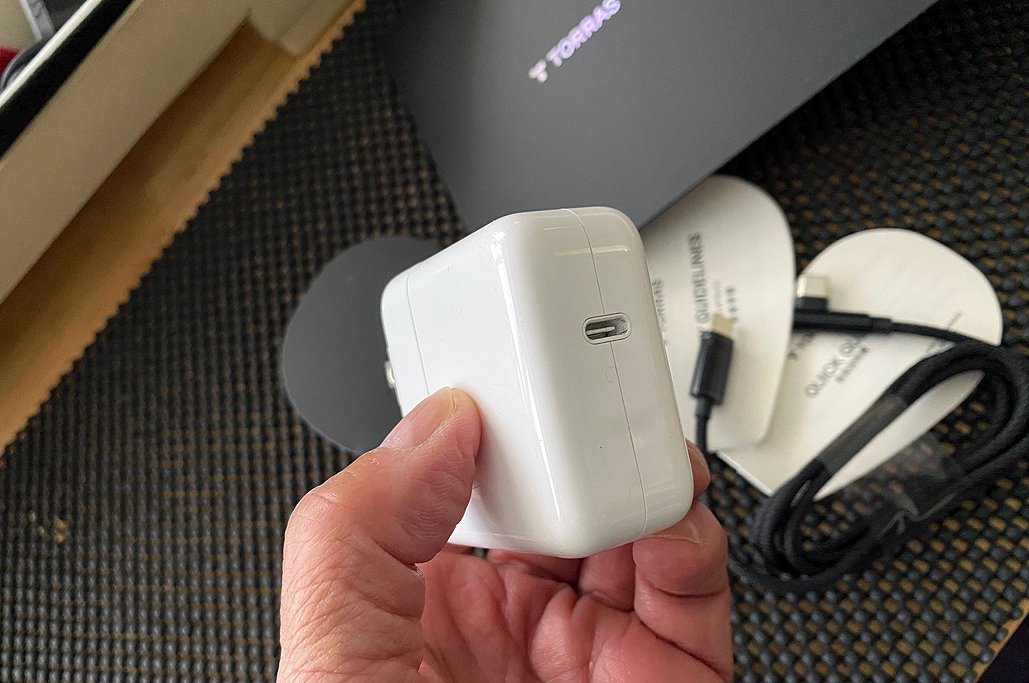
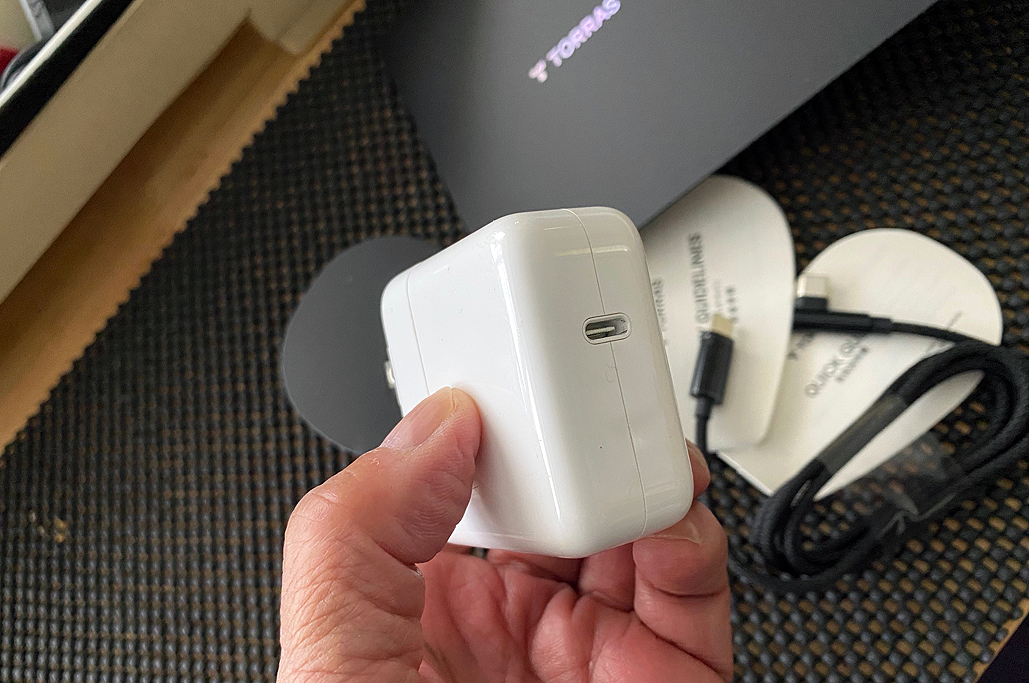
We applaud TORRAS for NOT including a wall charger in the package, as we don’t need another one cluttering up our drawer of AC wall chargers 🙂
BTW, if power strips and wall sockets all have integrated USB in them, then device makers will no longer need to include a charger, and we’ll all be better off.
The controls and the ergonomics of the units will be discussed in the coming FirstUse write-up. Look for it later in the month. Don’t worry, climate change is extending the warmer weather all over. There will be plenty of hot days ahead…unfortunately.
Links to items mentioned:


Leave a comment